
What every healthcare facility manager should know about hospital duct cleaning
Hospital duct cleaning protects patients and staff, in line with CDC infection-control and ASHRAE guidance. Duct & HVAC cleaning removes the dust, debris and moisture that harbor microbes inside air systems.
Hospitals never close — proactive inspection programs reduce airborne risk for vulnerable patients.
Clean high-risk areas every 12–24 months, per the NADCA ACR Standard and NIH guidance.
Clean systems hold the stable temperature and humidity critical spaces require.
Containment, negative pressure and HEPA filtration capturing 99.97% of 0.3-micron particles.
Hospital duct cleaning protects patient safety
Healthcare facilities face unique air-quality challenges tied to patient acuity, 24/7 occupancy and specialized spaces like operating rooms, ICUs and isolation rooms.
Every hour, a hospital's HVAC system circulates enormous volumes of air through spaces where the margin for error is zero. Surgical suites depend on positive pressure and filtered supply air to protect sterile fields; airborne-isolation rooms depend on negative pressure to contain pathogens; pharmacies, labs and imaging suites depend on tight temperature and humidity tolerances. When ductwork and air handlers are loaded with dust and microbial growth, every one of those engineering controls is compromised.
That is why leading medical centers treat hospital air duct cleaning and HVAC decontamination as part of the infection-prevention toolkit — not routine janitorial work. Clean air conveyance systems reduce the particulate load on filtration, protect vulnerable patients from opportunistic exposure, and give facilities teams documented proof that their environment of care is under control. The numbers make the case:

Joint Commission, CDC and ASHRAE all expect hospitals to maintain environments that control airborne risk. Duct and HVAC cleanliness is one piece of that compliance picture — and the one we handle end to end.
What is hospital duct cleaning?
Hospital duct cleaning is a specialized HVAC maintenance program built around healthcare risk profiles. Unlike general commercial duct cleaning, healthcare work means assessing and removing dust, debris and moisture-supporting residues from air handlers, coils and duct interiors while maintaining strict infection-control practices during the work itself — so the ventilation system keeps meeting ASHRAE 170 requirements in operating rooms, ICUs, pharmacies and isolation rooms even while crews are on site.
Regulatory and accrediting organizations — the Joint Commission, CDC and ASHRAE — expect hospitals and medical centers to maintain environments that control airborne risk, especially in critical care areas. Air duct and HVAC cleanliness is one piece of that compliance picture, and it is the piece that lets every other engineering control — filtration, air changes, pressure relationships — perform the way it was designed to.
What hospital duct cleaning does for your facility
Infection-prevention support
Source removal eliminates dust and moisture reservoirs so biofilms and mold never get established — protecting immunocompromised, transplant and oncology patients.
ASHRAE 170 performance
Clean coils and ducts hold design airflow, temperature and humidity in ORs, pharmacies, labs and imaging suites.
Lower operating costs
Less airflow resistance and efficient heat-exchange surfaces mean fewer emergency calls and longer equipment life.
Equipment protection
Cleaner air protects diagnostic imaging and lab analyzers from dust infiltration — supporting uptime and accuracy.
What builds up inside hospital HVAC systems
Hospitals accumulate airborne contaminants faster than almost any other facility type. Constant foot traffic, bed linens and textiles shed particulate around the clock, while humidity fluctuations encourage mold growth in poorly drained or insulated duct sections. Renovation and construction projects — near-permanent realities on hospital campuses — can overwhelm filters with drywall and concrete dust in a matter of days.
Moisture-prone HVAC components deserve special attention: dirty cooling coils, standing water in drain pans and wet fiberglass liner can all support microbial growth if neglected. Add chemical residues from routine cleaning processes and lint-loaded laundry exhaust systems, and the air conveyance system becomes a reservoir that recirculates contaminants through patient rooms, ORs and public corridors.
How often should a healthcare facility clean its ductwork?
The NADCA ACR Standard calls for inspection-based cleaning: assess system cleanliness first, then clean when contamination exceeds benchmarks or when moisture and microbial growth are present. In healthcare settings, air handling units and supply and return ductwork should be inspected at least annually, with most facilities planning source-removal cleaning every 12–24 months for high-use and critical areas.
Emergency cleaning is warranted after outbreaks, water intrusion events or uncontrolled construction dust. Whatever the trigger, every project should close with documented scope, methods and verification — records that support Joint Commission accreditation and demonstrate a defensible preventive maintenance program.
What's included
- Pre-assessment with system mapping and critical-zone planning
- Negative-pressure containment with HEPA-filtered collection
- Source removal from ducts, air handlers, coils and drain pans
- Hospital-appropriate antimicrobial treatment, only where indicated
- Post-clean verification: photos, particle counts, sampling per policy
- Closeout report for Infection Prevention & Facilities files
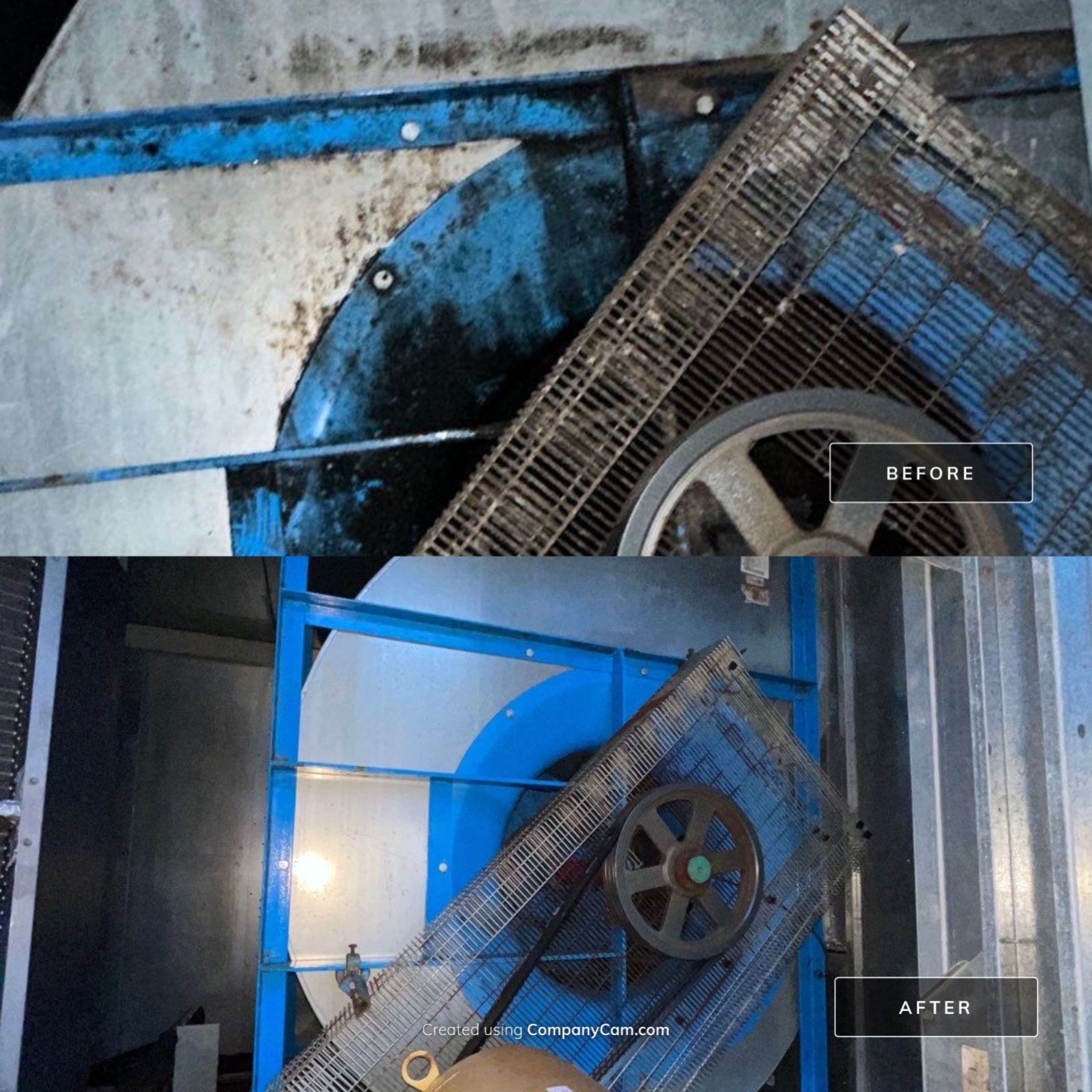
Our crews inside real medical facilities
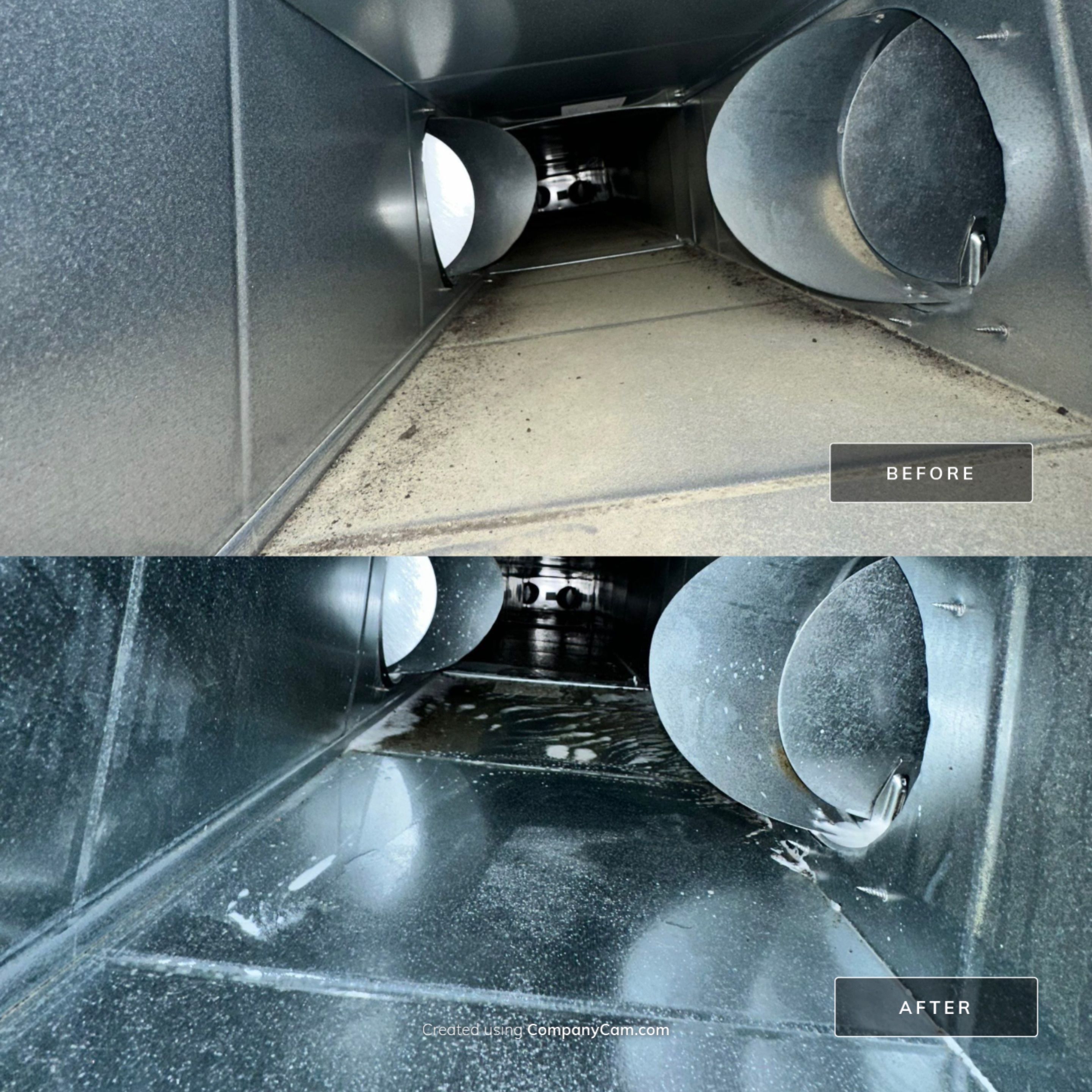
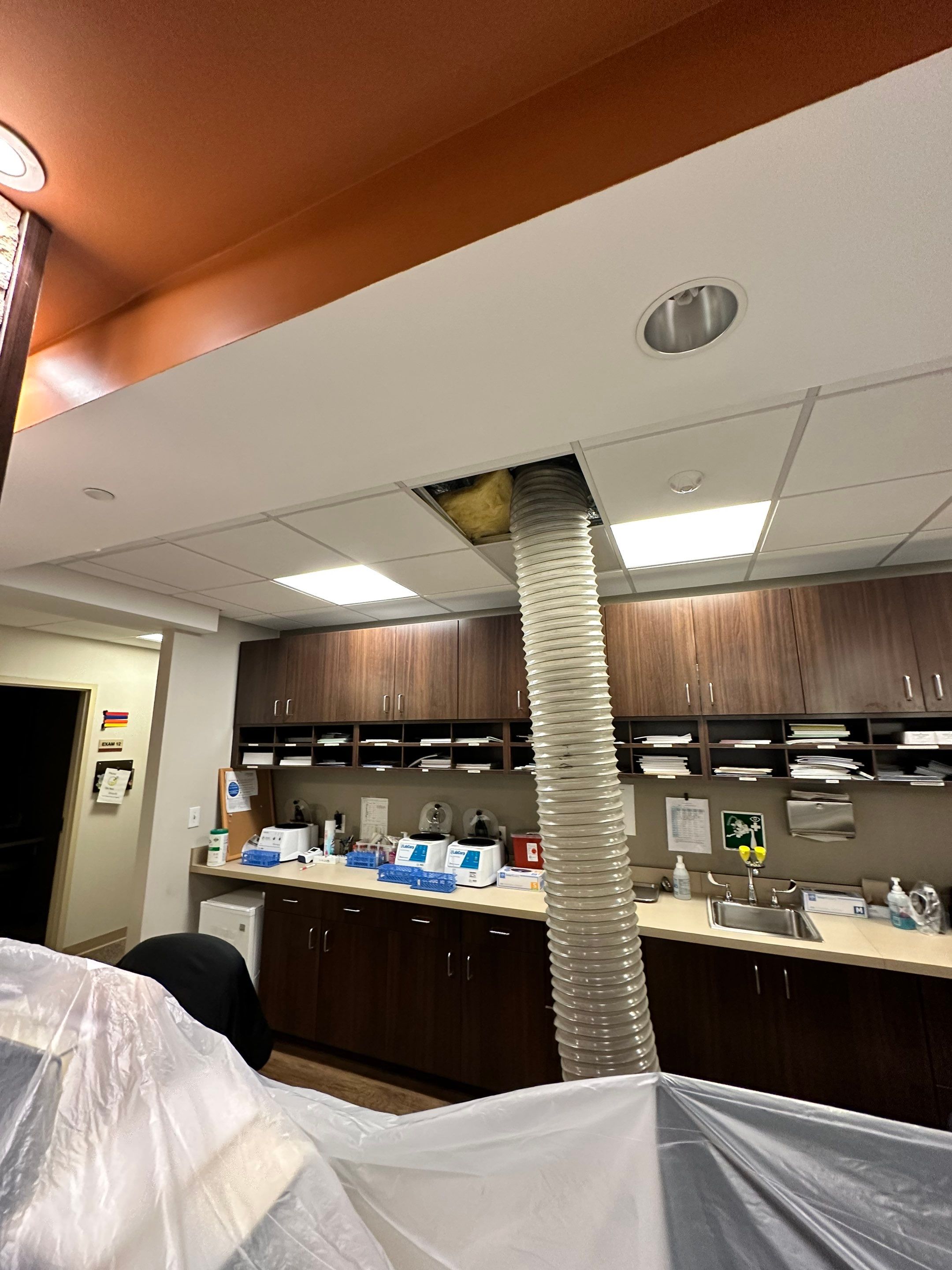
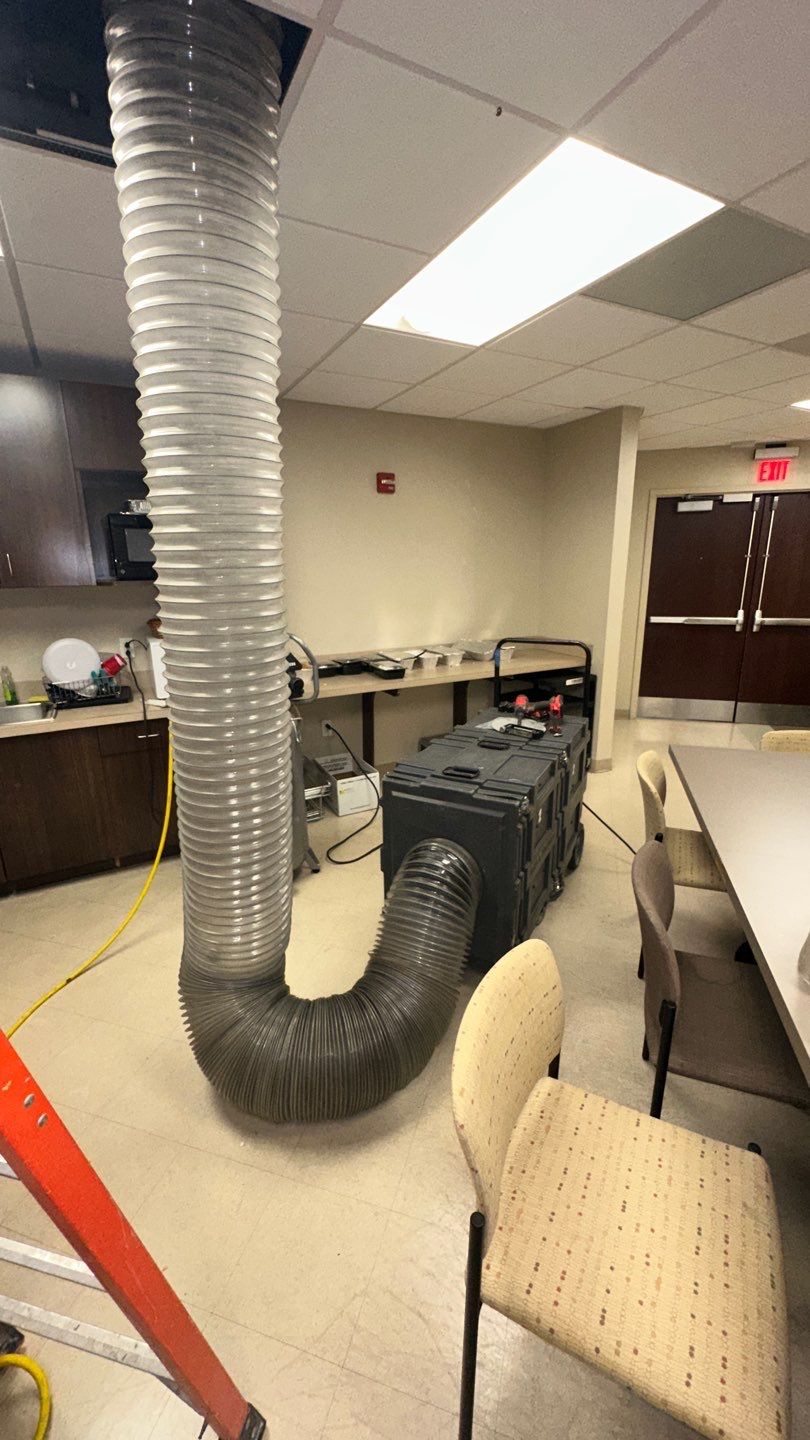
Five steps, fully contained, fully documented
Assess & Plan
System mapping, risk zones and a containment plan built with your facilities team.
Contain
Physical barriers and HEPA negative air isolate every work zone from patients.
Source Removal
Agitation and extraction of deposits from ducts, coils, blowers and plenums.
Verify
Matched-angle photos, particle counts and sampling confirm cleanliness.
Report
Audit-ready closeout and a recommended re-inspection cadence.
Choosing a hospital duct cleaning provider
Not every commercial duct cleaner is equipped for a healthcare environment. When evaluating providers for hospital or medical center HVAC cleaning, require proof of NADCA certification and documented healthcare experience, demonstrated mastery of containment, negative pressure and HEPA-filtered collection, familiarity with ASHRAE 170 ventilation expectations for critical spaces, robust QA and site-safety planning with emergency response capability, and appropriate insurance with clear, transparent scopes of work. IAQ Restoration meets every one of these criteria on every project — and our closeout documentation proves it.
Hospital duct cleaning questions, answered
Inspect at least annually and clean based on verified conditions. Most healthcare facilities plan cleaning every 12–24 months for high-risk areas such as ORs and ICUs, and immediately after construction, water events or outbreaks — consistent with the NADCA ACR Standard.
No. Work is phased by zone, performed during off-peak windows, and every area is isolated under negative pressure with HEPA filtration. Critical areas are coordinated with clinical leadership so ventilation continuity is never broken.
Physical containment barriers, continuous negative air pressure, HEPA-filtered collection equipment, infection-control PPE protocols, and air quality checks before any space is turned back over.
Matched-angle before/after photos, particle counts, and — where facility policy requires — microbial sampling, all measured against NADCA ACR cleanliness criteria and documented in your closeout report.
Yes. Inspection findings, work plans and verification records demonstrate preventive maintenance of environmental controls — exactly the documentation surveyors look for in Environment of Care reviews.
The crew escalates to enhanced containment and remediation protocols, coordinates with your Infection Prevention team, and isolates affected zones until post-remediation verification passes.
Duct cleaning normally doesn't involve protected health information. Where work occurs near records or registration areas, we follow your privacy safeguards and confidentiality policies; a BAA is only needed if a vendor actually handles PHI.
Get a facility assessment for your medical center
NADCA-certified healthcare crews, nationwide. Free scope review from your mechanical plans.
Call 800-883-6040 Request a Quote Online