
What every owner should know after a loss
Disaster restoration duct cleaning restores air systems after fire, flood and smoke, in line with EPA indoor air quality and NADCA standards. After fire or flood, running HVAC spreads soot, odor and mold spores to every conditioned space in the building.
Mold can begin colonizing wet duct liner, insulation and coils within one to two days of water intrusion.
Ductwork is the highway smoke takes through a building — if it isn't cleaned, odor and corrosive residue come back.
IAQ Restoration mobilizes nationwide around the clock for fire, water and storm losses of any size.
Containment, negative pressure and HEPA filtration capturing 99.97% of 0.3-micron particles.
The HVAC system is the hidden loss
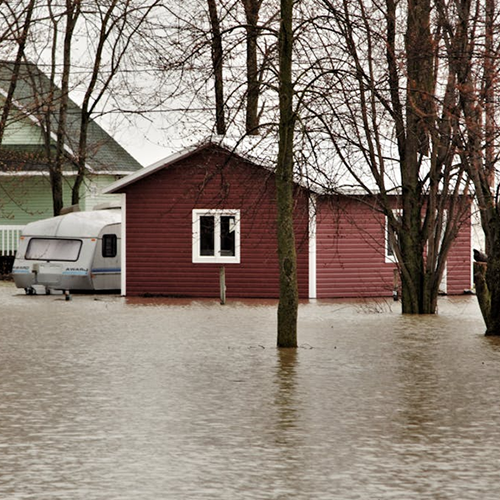
After a fire, flood or storm, the visible damage tells only part of the story. While charred walls and soaked carpet get all the attention, the air conveyance system quietly holds the contamination that will haunt the building for years if it isn't addressed.
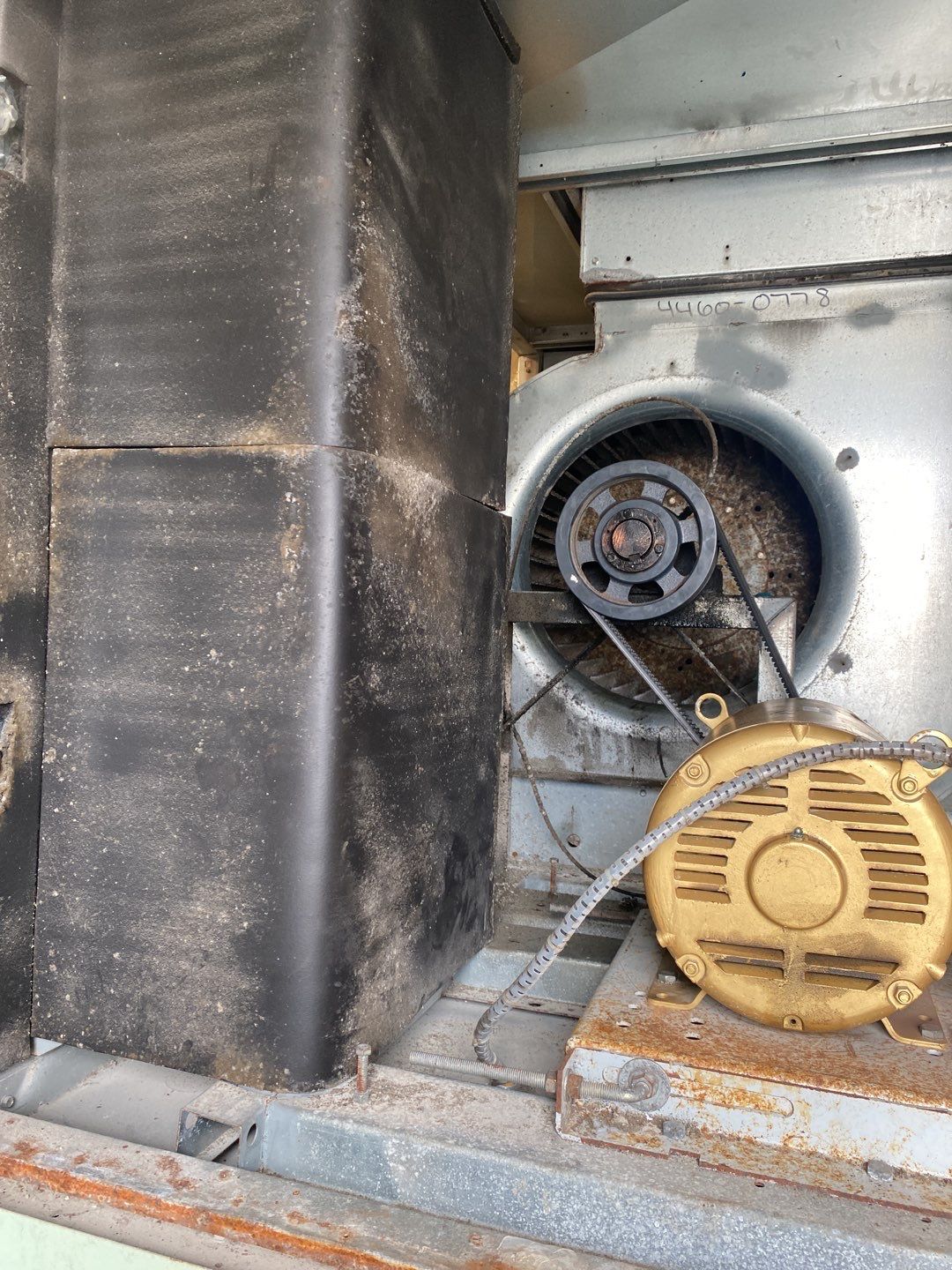
Fire losses drive corrosive, acidic soot and smoke residue deep into ductwork — especially if the system ran during the event. Rebuild the space without cleaning the ducts and the first hour of airflow re-contaminates every new finish, and the smoke odor returns with it. Water losses are quieter but faster: wet duct liner, fiberglass insulation and coil sections can support mold growth within 24–48 hours, turning a water claim into a mold claim.
IAQ Restoration specializes in commercial and industrial HVAC disaster restoration — large-loss experience, 24/7 nationwide mobilization, and insurance-ready documentation that fits cleanly into the broader restoration effort alongside your GC and adjuster. The numbers make the case:
What HVAC restoration does for your recovery
Faster reopening
Cleaning the air path in parallel with the rebuild keeps the schedule intact — no last-minute odor surprises at handover.
Odor gone at the source
Source removal plus deodorization eliminates the soot and residue that make smoke odor return — not masking, removal.
Mold prevention
Rapid drying, removal of saturated liner and antimicrobial treatment stop water losses from becoming mold losses.
Insurance-ready records
Scoped, photographed and verified work product that drops cleanly into the claim file for adjusters and consultants.
What disasters leave inside HVAC systems
Fire and smoke. Combustion residue is corrosive and acidic — left in ductwork it degrades metal, embeds odor and recontaminates rebuilt spaces the moment air moves. Systems that operated during the fire distribute soot to every zone they serve, which is why post-fire duct assessment belongs in every fire scope, not just the rooms that burned.
Water and flooding. Ductwork, liner and air handlers hold moisture long after visible surfaces dry. Fiberglass insulation that took water rarely recovers; per the NADCA ACR Standard, saturated liner is removed and replaced, not dried in place. Mold colonization can begin within 24–48 hours — fast action determines whether you have a drying project or a remediation project.
Storms and hurricanes. Hurricanes, tropical storms, windstorms and inland flooding cause over $54 billion in damage annually. Wind-driven debris, roof breaches over air handlers and flood-contaminated mechanical rooms all put the air system at the center of the loss — and of the recovery.
How HVAC restoration fits your claim
We work as part of the restoration team: coordinating with your general contractor and mitigation vendor, providing written scopes and photo documentation adjusters can approve quickly, and sequencing our containment and cleaning around demolition and rebuild phases. Large-loss, multi-building and campus events are our specialty — we mobilize crews nationwide within hours, not weeks.
What's included
- Emergency assessment with moisture mapping and video inspection
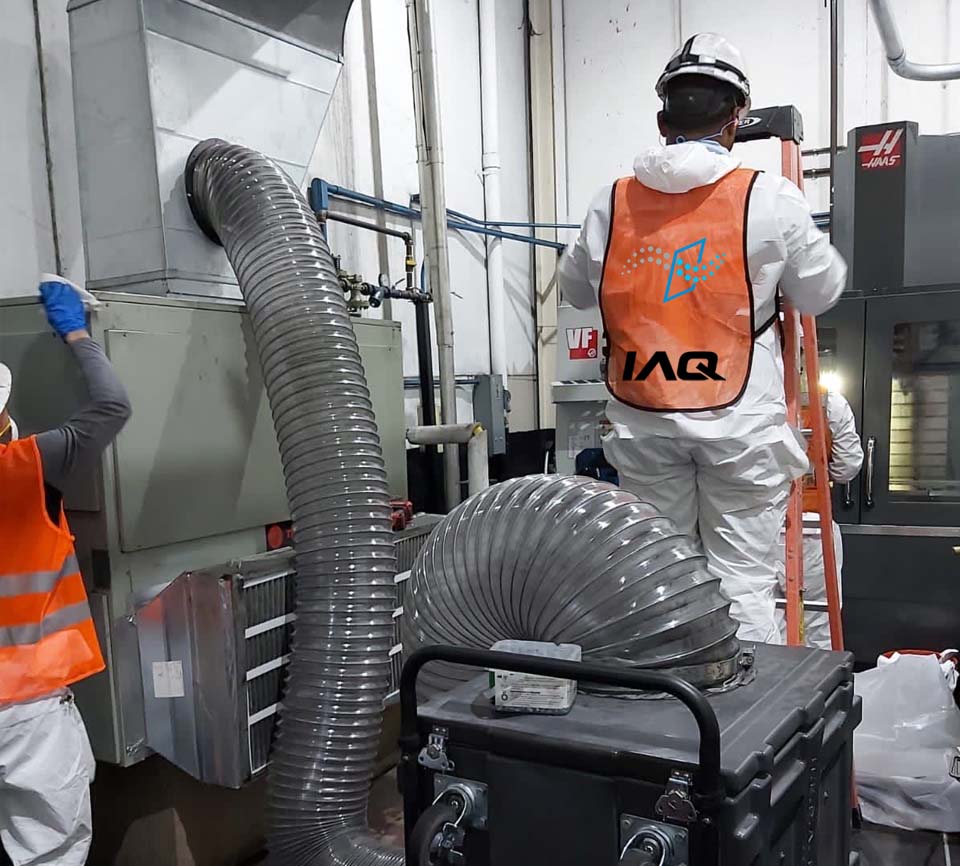
- HEPA negative-air containment of affected zones
- Soot and debris source removal from ducts, coils and air handlers
- Removal and replacement of saturated liner and insulation
- Deodorization and EPA-registered antimicrobial treatment
- Insurance-ready closeout: scope, photos and verification
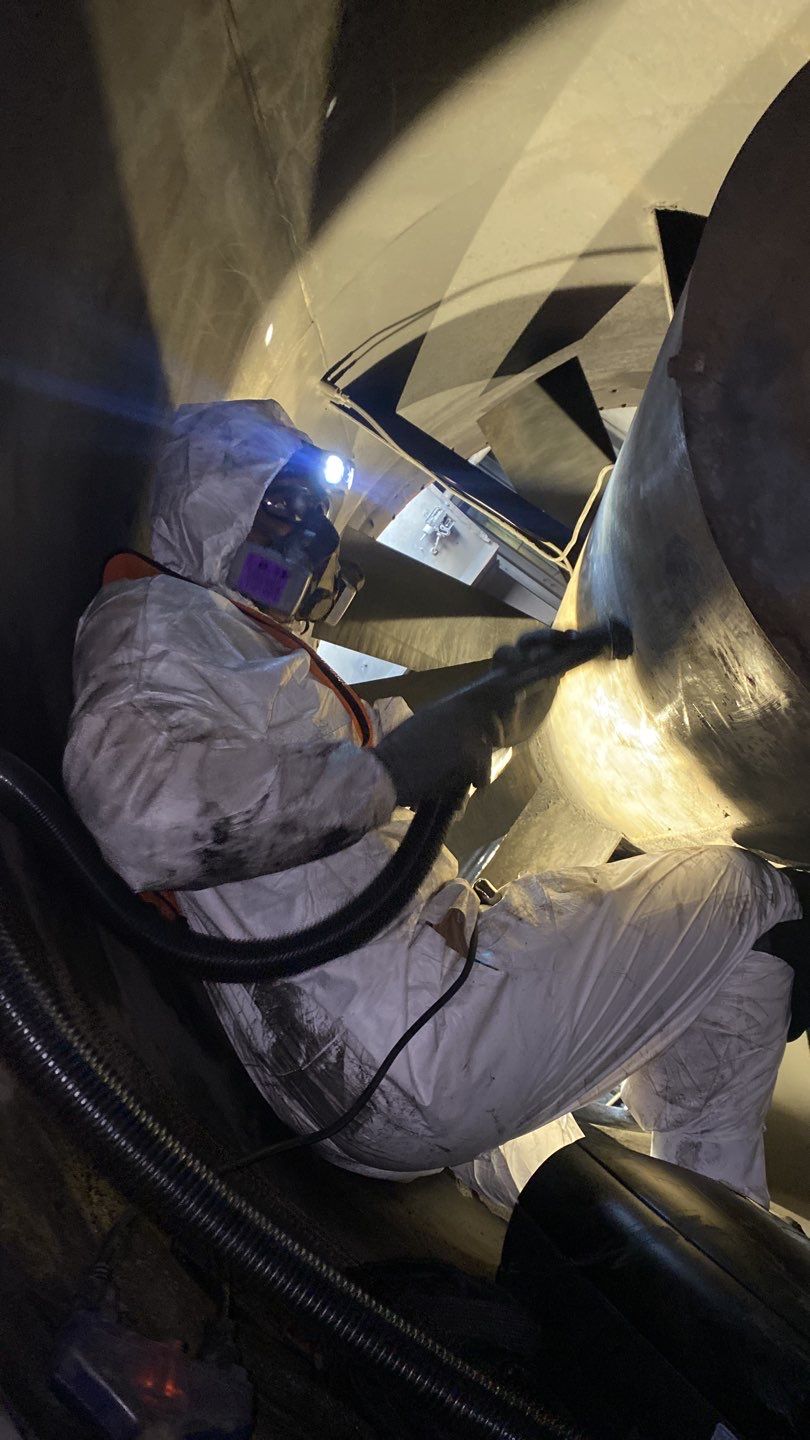
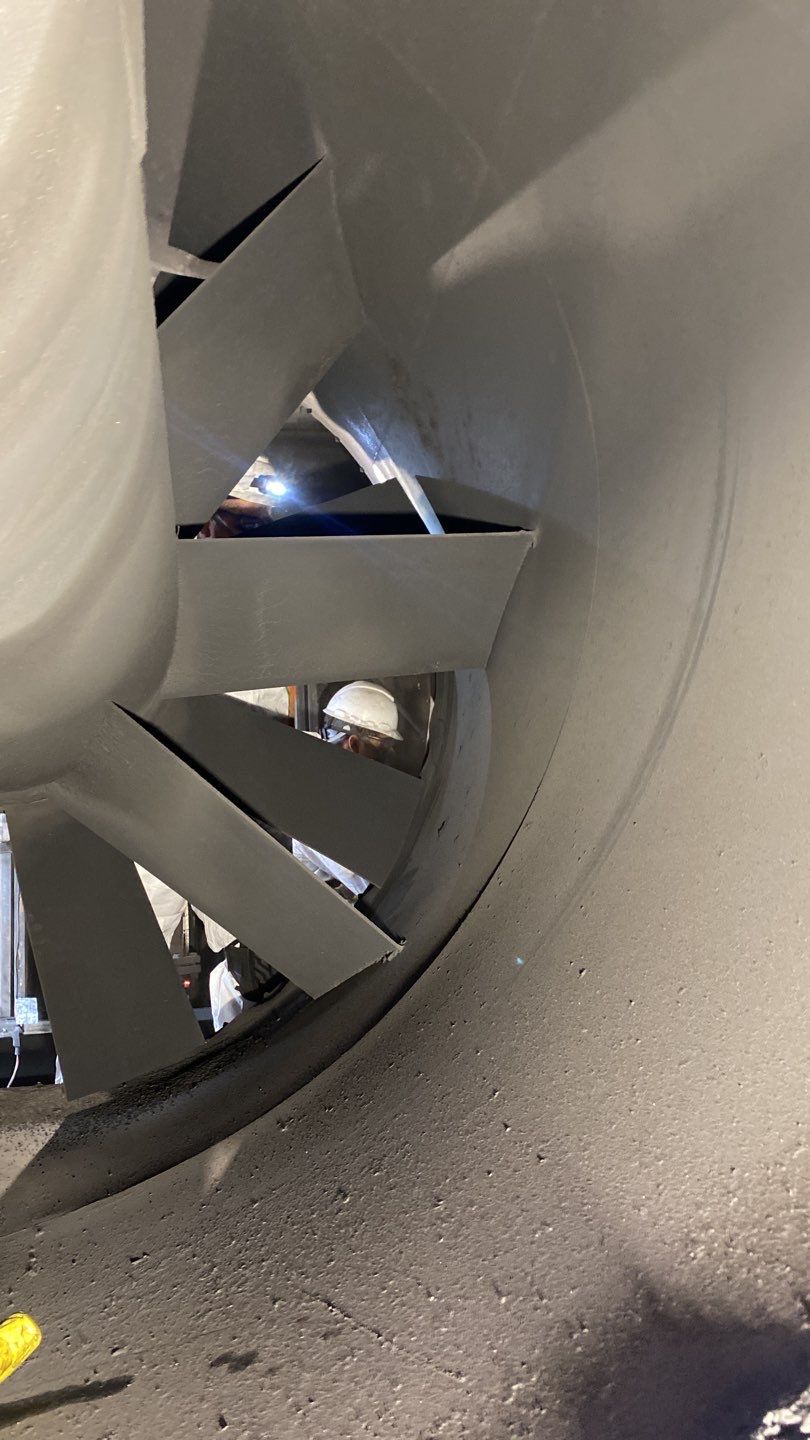
Our crews on real recovery projects
Five steps from loss to clean air
Emergency Assess
Rapid mobilization, moisture mapping and a scope your adjuster can approve.
Contain
HEPA negative air isolates contamination from unaffected zones.
Source Removal
Soot, debris and saturated materials out; ducts, coils and AHUs cleaned.
Treat & Verify
Deodorization, antimicrobial application and photo verification.
Document
Claim-ready closeout package for owner, GC and carrier.
Choosing an HVAC disaster restoration provider
After a loss, speed matters — but so does doing it once, correctly. Insist on NADCA certification with documented large-loss experience, true 24/7 mobilization capacity, containment discipline that protects unaffected areas mid-recovery, familiarity with insurance workflows and restoration GCs, and closeout documentation that closes claims instead of reopening them. IAQ Restoration has restored HVAC systems after fires, floods and hurricanes at commercial and industrial facilities nationwide.
Disaster HVAC restoration questions, answered
No. Running the system circulates corrosive soot and smoke odor into every conditioned space and deepens the loss. Keep it off until the air conveyance system has been assessed and cleaned.
We dispatch 24/7 and mobilize nationwide — typically on site within hours for emergency losses, with full crews and equipment scaled to the size of the event.
Yes. We provide written scopes, unit-level detail and matched-angle photo documentation formatted for claim files, and we coordinate directly with adjusters, consultants and restoration general contractors.
Mold can begin colonizing wet duct liner, insulation and coils within 24–48 hours. Rapid assessment and drying — and removal of saturated liner per the NADCA ACR Standard — prevent a water claim from becoming a mold claim.
Not when the residue is removed at the source. We clean soot from ducts, coils and air handlers and then deodorize — eliminating the reservoir instead of masking it, which is why the odor stays gone.
Yes. Large loss is our specialty — campuses, high-rises and multi-building facilities — with crews, lifts and equipment scaled to the event and one point of coordination.
Emergency assessment findings, written scope, moisture and photo documentation, product SDS, and a verified closeout package built for owners, GCs and insurance carriers.
Fire, water or storm damage? We answer 24/7.
Nationwide emergency mobilization for commercial and industrial HVAC restoration.
Call 800-883-6040 Now Request Emergency Service