
What every senior living administrator should know about senior living duct cleaning
Senior living duct cleaning protects resident health and comfort, in line with EPA indoor air quality and NADCA standards. Aging lungs, COPD, asthma and weakened immune systems make seniors far more sensitive to airborne contaminants.
Residents live in the building 24/7 — there is no going home to cleaner air at the end of the day.
Flu, RSV and other respiratory outbreaks spread fast in congregate living — clean air systems support prevention.
NADCA ACR calls for inspection-based cleaning; care facilities typically need 12–24 month cycles.
Containment, negative pressure and HEPA filtration capturing 99.97% of 0.3-micron particles.
Air quality is resident care
Assisted living communities, memory care units and skilled nursing facilities house the people most affected by poor indoor air — and the least able to escape it. Residents spend nearly all of their time indoors, many with COPD, asthma, heart conditions or immune systems weakened by age and medication.
Contaminated air systems hit senior communities three ways. Health: recirculated dust, allergens and microbial growth aggravate respiratory conditions and can contribute to outbreaks that move fast through congregate living. Comfort and dignity: musty odors from moldy coils and drain pans are often the first thing families notice on a tour — and odor is a leading silent killer of occupancy. Compliance: surveyors and licensing agencies expect documented environmental maintenance, and air quality complaints from families escalate quickly.
IAQ Restoration cleans senior living facilities with the same infection-control discipline we bring to hospitals: full containment, HEPA-filtered negative air, hypoallergenic products and quiet, resident-aware crews who work around care routines. The numbers make the case:

What clean air systems do for your community
Easier breathing
Removing dust, allergens and microbial growth from the air path reduces respiratory irritation for residents with COPD and asthma.
Outbreak resilience
Clean systems plus optional UV-C treatment support infection-prevention programs during flu and RSV season.
Fresher first impressions
Eliminating musty HVAC odors changes what families smell on tour day — a direct occupancy and reputation lever.
Lower operating costs
Clean coils and open airflow cut energy waste and extend equipment life across the campus.
What builds up inside senior living HVAC systems
Care communities run hard: kitchens serving three meals a day, laundries processing linens around the clock, high housekeeping activity, and residents and staff moving through shared spaces continuously. All of it feeds dust, lint, fibers and moisture into ventilation systems that rarely rest. In-room fan coil units and PTACs collect years of debris in cabinets inches from where residents sleep.
Moisture is the quiet enemy. Cooling coils, drain pans and humid laundry and bathing areas support mold growth that spreads odor through corridors and triggers the respiratory complaints care staff hear daily. Because many residents cannot articulate air-quality problems — especially in memory care — contamination often goes unreported until families or surveyors notice.
Communities we service
Independent living, assisted living, memory care, skilled nursing and continuing-care retirement communities. Scopes cover resident rooms, corridors, dining rooms, activity spaces, therapy gyms, kitchens and laundries — with hypoallergenic products throughout and special protocols for memory care neighborhoods where routine and calm matter most.
How often should senior living facilities clean their ductwork?
The NADCA ACR Standard calls for inspection-based cleaning: assess conditions first, clean where contamination exceeds benchmarks. For care communities we recommend annual inspections, with source-removal cleaning typically every 12–24 months — and immediately after renovations, water intrusion, persistent odors or respiratory outbreak events. Every project closes with documentation for administrators, surveyors and family communications.
What's included
- Air handling units, rooftop units and mechanical rooms
- Supply, return and exhaust ductwork in every neighborhood
- In-room fan coils and PTAC units, coils and drain pans
- Kitchen and laundry ventilation, moisture-affected sections
- Optional UV-C germicidal installation and air purification
- Administrator-ready closeout with photo verification
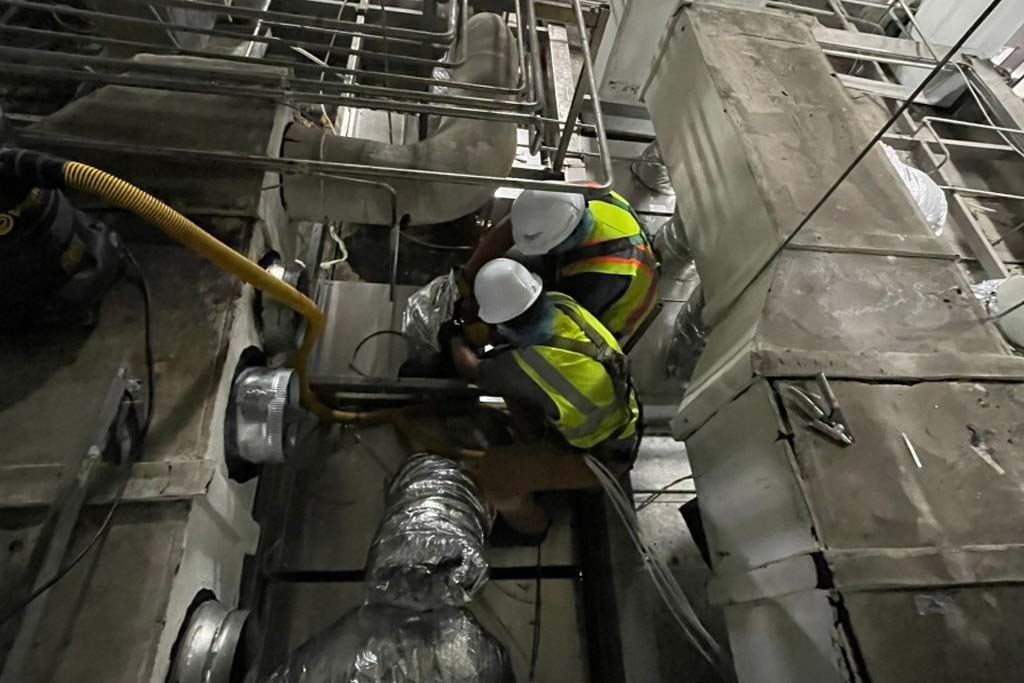
Our crews at work
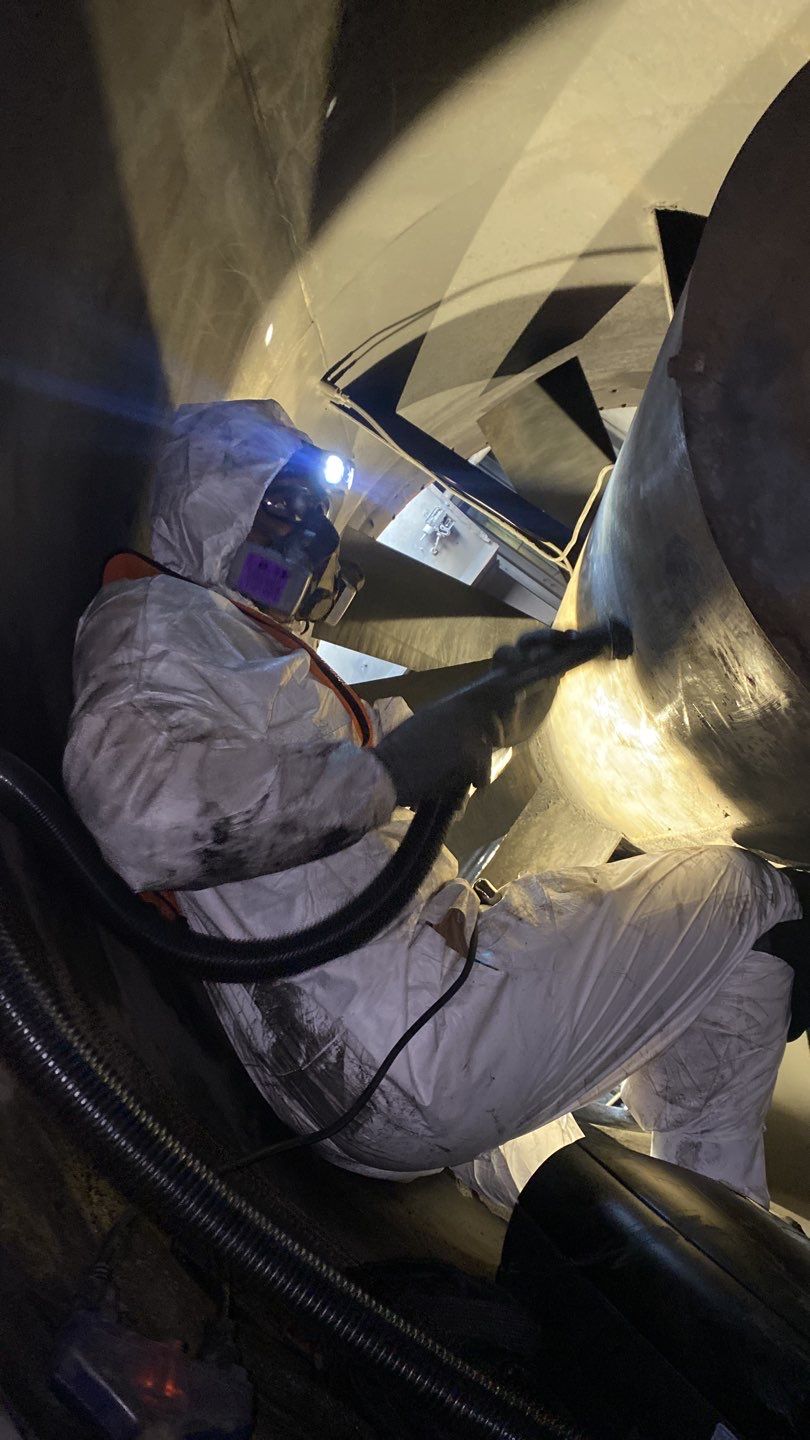
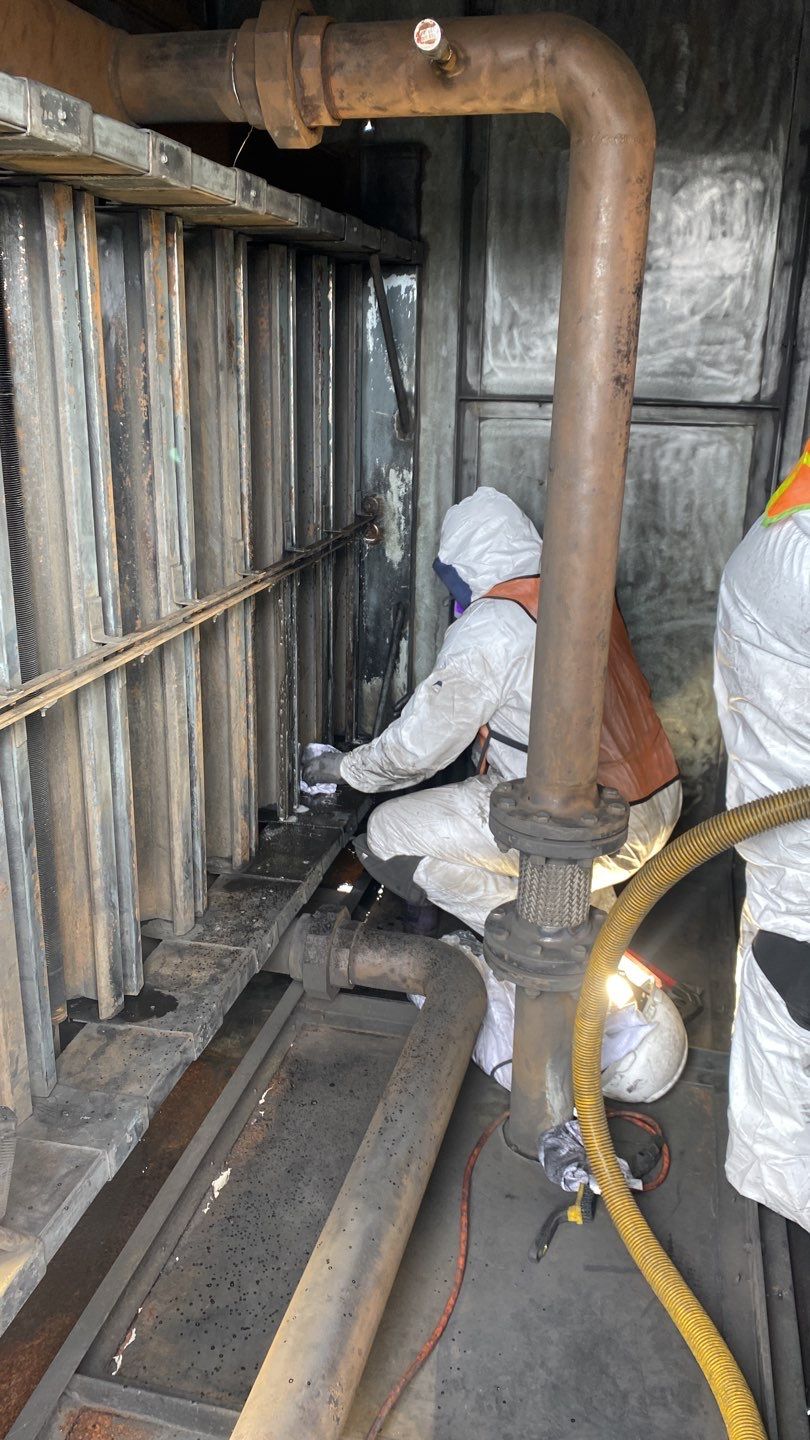
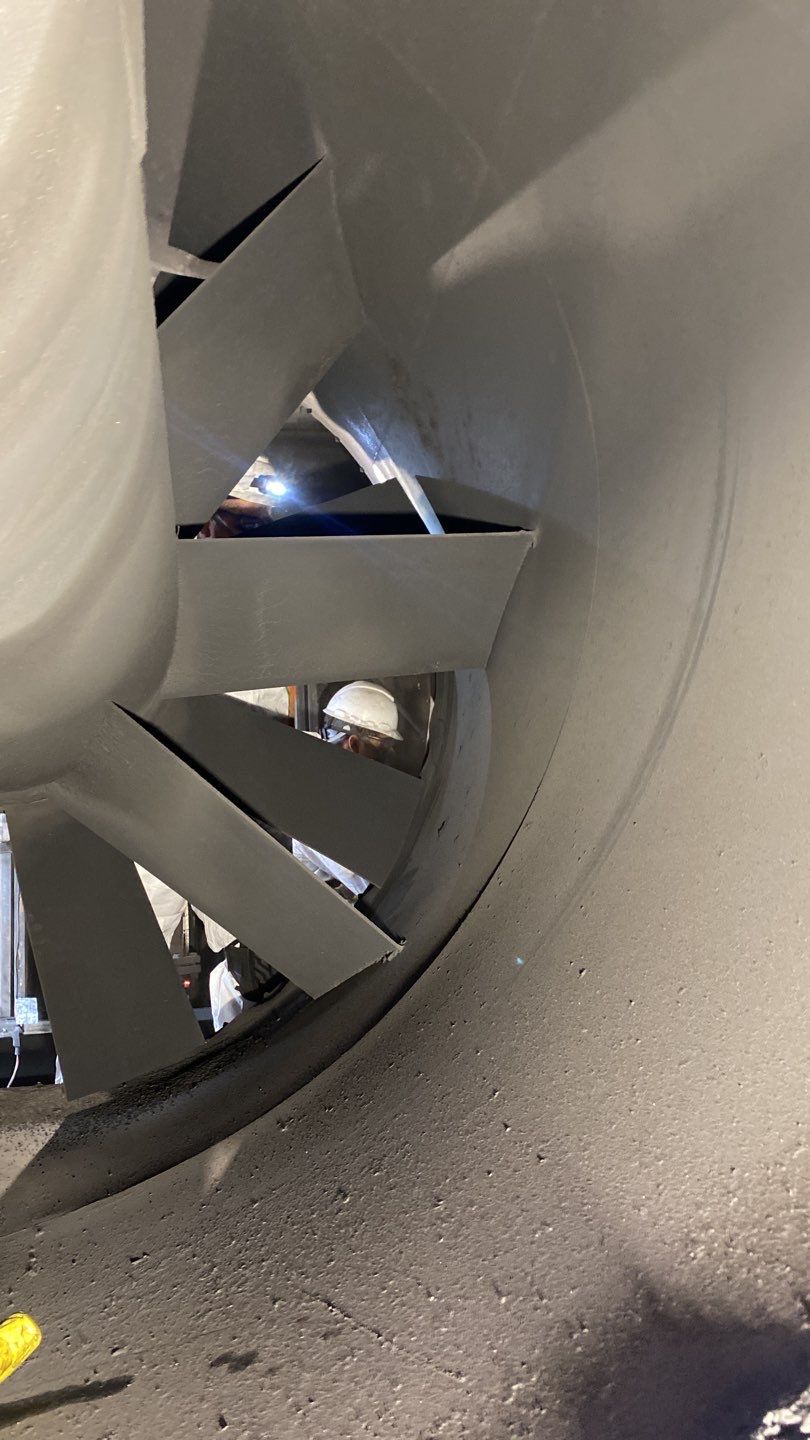
Five steps, gentle on residents
Assess & Plan
System mapping and a schedule built around care routines and meal times.
Contain
Barriers and HEPA negative air keep every resident area protected.
Source Removal
Quiet, phased extraction through ducts, fan coils, PTACs and blowers.
Verify
Matched-angle before/after photos confirm cleanliness against ACR criteria.
Report
Administrator-ready closeout for surveyors and family updates.
Choosing a duct cleaning provider for senior living
Care communities need more than a cleaning crew — they need a partner who understands congregate living. Require NADCA certification with healthcare or senior-care references, infection-control training and containment discipline, background-checked technicians comfortable working respectfully around residents, scheduling that bends to care routines rather than the other way around, and closeout documentation that satisfies surveyors and reassures families. IAQ Restoration brings hospital-grade practice to every senior community we serve.
Senior living duct cleaning questions, answered
Inspect annually and clean based on verified conditions. Most care communities schedule source-removal cleaning every 12–24 months, and immediately after renovations, water events, persistent odors or respiratory outbreaks — consistent with the NADCA ACR Standard.
No. Work is phased by wing and scheduled around meals, activities and rest periods. Zones are contained under HEPA negative air, noise is managed, and residents never need to relocate overnight.
Yes. Musty odors usually trace to microbial growth on coils, drain pans and duct interiors. Source-removal cleaning plus targeted disinfection eliminates the reservoir instead of masking the smell.
Yes. Memory care neighborhoods get tighter containment, consistent crew members, coordination with care staff on timing, and work practices designed to minimize disruption to resident routines.
Yes. In-room fan coil units and PTACs are included in scope — cabinets, coils, blowers and drain pans — because they condition the air closest to each resident.
Yes. Clean air conveyance systems, verified with documentation, complement filtration and UV-C strategies during flu and RSV season and demonstrate environmental diligence to surveyors.
A written scope, safety plan and matched-angle before/after photo verification — formatted for facility records, licensing surveys and family communications.
Get a facility assessment for your community
Hospital-grade practice, resident-aware crews. NADCA-certified, nationwide.
Call 800-883-6040 Request a Quote Online