
Data center duct cleaning protects uptime and equipment, in line with EPA indoor air quality and NADCA standards. NADCA-certified duct, coil and plenum cleaning for data centers and mission-critical facilities — performed live, around your uptime, with sealed contamination control. Nationwide, 24/7.
We work live around N+1 redundancy and maintenance windows — cooling never drops and racks stay online.
Dust on coils and in CRAC/CRAH airflow raises intake temps and makes equipment work harder and fail sooner.
Sealed containment and HEPA collection keep particulate off servers, storage and network gear.
Work supports the thermal and air-quality envelope ASHRAE recommends for IT-equipment reliability.
Photos, particle counts and closeout records for your compliance, SLA and insurance files.
A data center lives and dies by its airflow. Precision cooling — CRAC and CRAH units, raised-floor plenums, hot and cold aisles — moves enormous volumes of air past sensitive electronics every second. When ductwork, coils and plenums load up with dust, that air carries particulate onto circuit boards and storage media while fouled coils quietly rob the cooling system of capacity.
The result is higher intake temperatures, throttled or failing equipment, tripped thermal alarms and shortened hardware life — the slow, expensive kind of failure that only shows up on a hot day or a load spike. Zinc whiskers, construction dust and general particulate are documented causes of shorts and outages in raised-floor environments.
Professional air-side cleaning protects the cooling margin you paid for, keeps particulate off mission-critical gear, and gives facilities and IT teams documented proof the environment is under control. The numbers make the case:
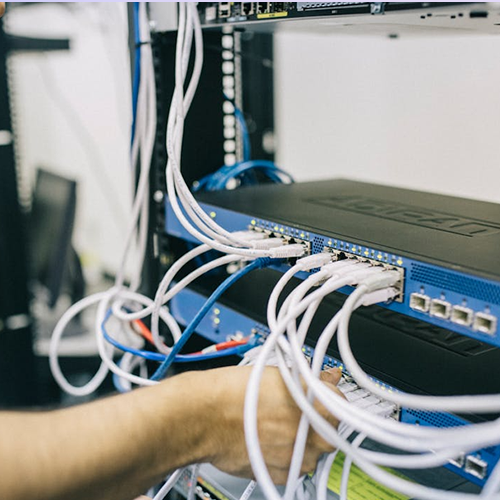
Standards from ASHRAE (TC 9.9 thermal guidelines) and cleanliness frameworks like ISO 14644 point the same way: the air moving through your white space has to be clean and controlled. Duct, coil and plenum cleanliness is the piece that lets precision cooling and filtration perform the way they were engineered to.
Clean coils and plenums restore design airflow and heat exchange, so precision cooling holds setpoints without overworking.
Source removal keeps dust, fibers and zinc whiskers off servers, storage and network gear — fewer shorts and thermal events.
Clean heat-exchange surfaces and unobstructed airflow cut cooling-energy waste and help your PUE.
Documented, contained cleaning supports uptime SLAs, Tier expectations and preventive-maintenance programs.
Even a filtered, pressurized white space accumulates contamination. Outside air brings fine particulate; construction and move/add/change work sheds dust; packaging and foot traffic add fibers. It settles in supply and return plenums, on coil faces, in CRAC/CRAH cabinets and across raised-floor voids — exactly where the cooling air has to pass.
Unlike an office, a data center can never simply shut down for cleaning, and the equipment it protects is exquisitely sensitive to heat and particulate. Work has to happen live, in a running critical environment, with containment that guarantees not a speck migrates onto energized gear. That takes crews who understand redundancy, hot/cold-aisle discipline and change control — not general duct cleaners.
A coil with even a thin dust film loses measurable heat-transfer efficiency. The cooling system compensates by running longer and colder, driving up energy and PUE while shrinking the redundancy margin meant to protect you during a failure or heat event. Cleaning restores that margin.
Follow inspection-based cleaning per the NADCA ACR Standard: assess coil and plenum cleanliness, then clean when contamination is present or after construction, MAC work or a filtration lapse. Most mission-critical facilities inspect CRAC/CRAH units and plenums at least annually and clean on a 1–2 year cycle, fully documented.
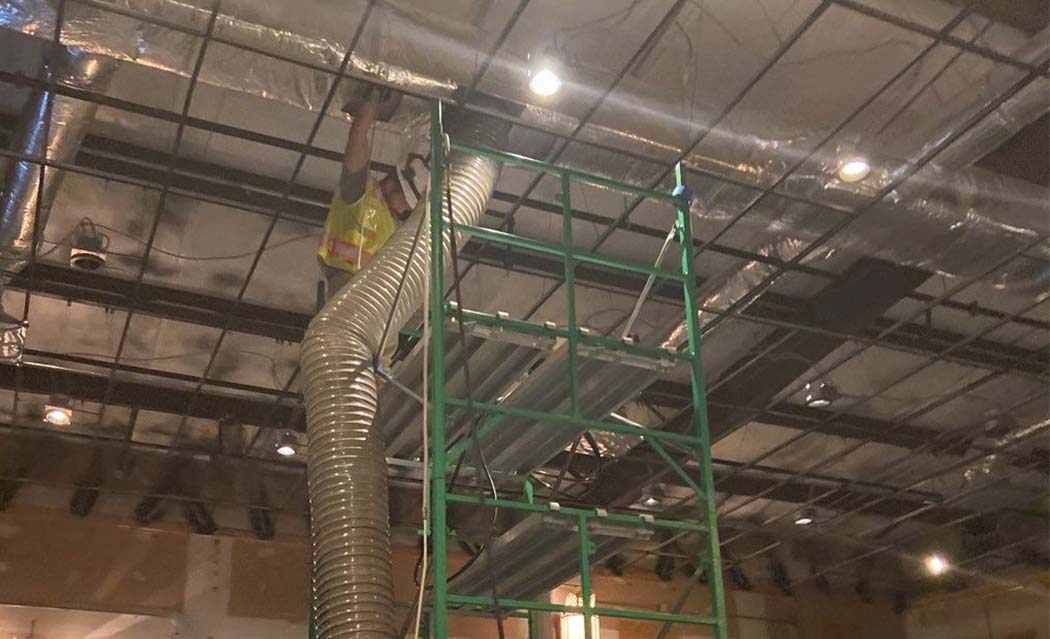
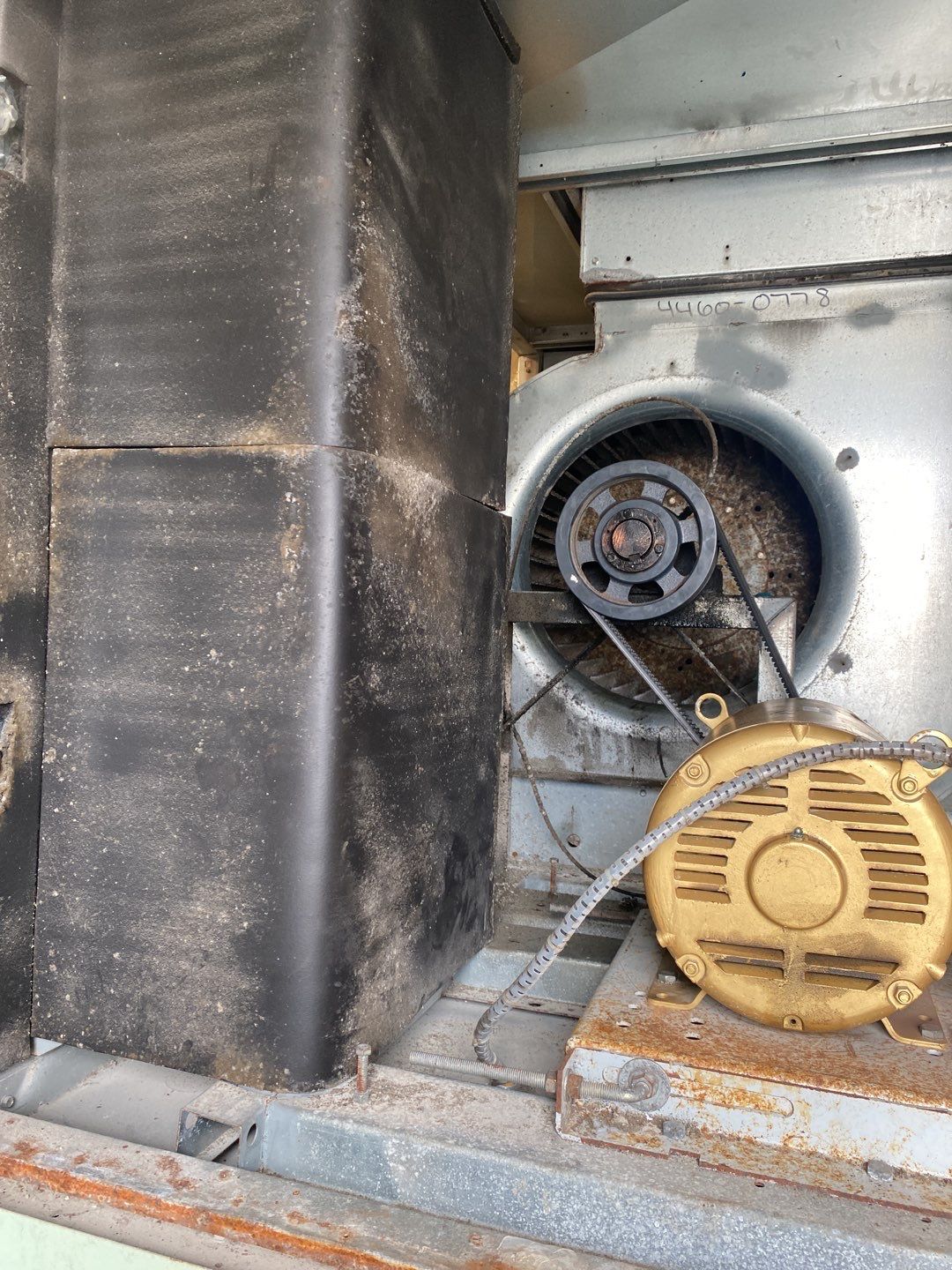
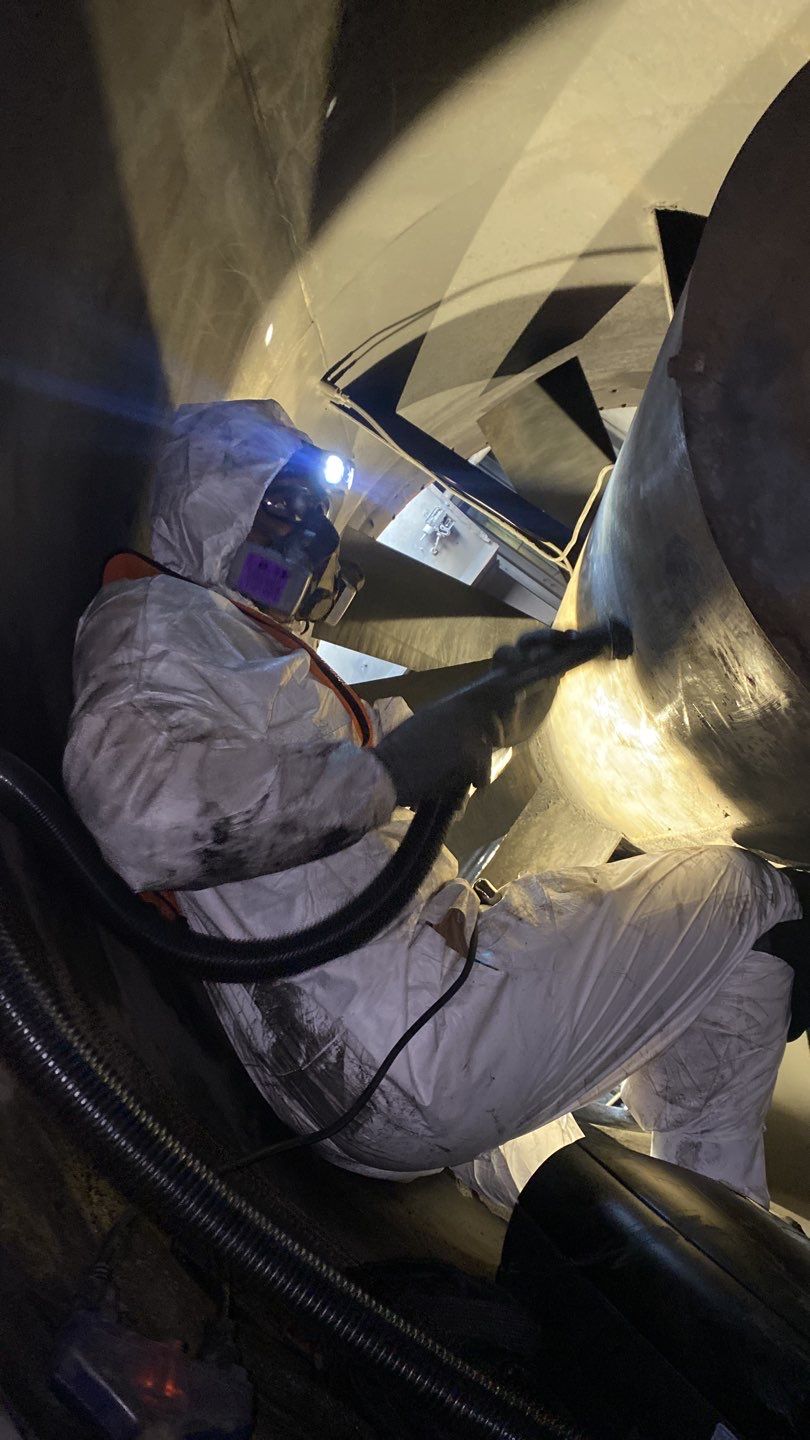
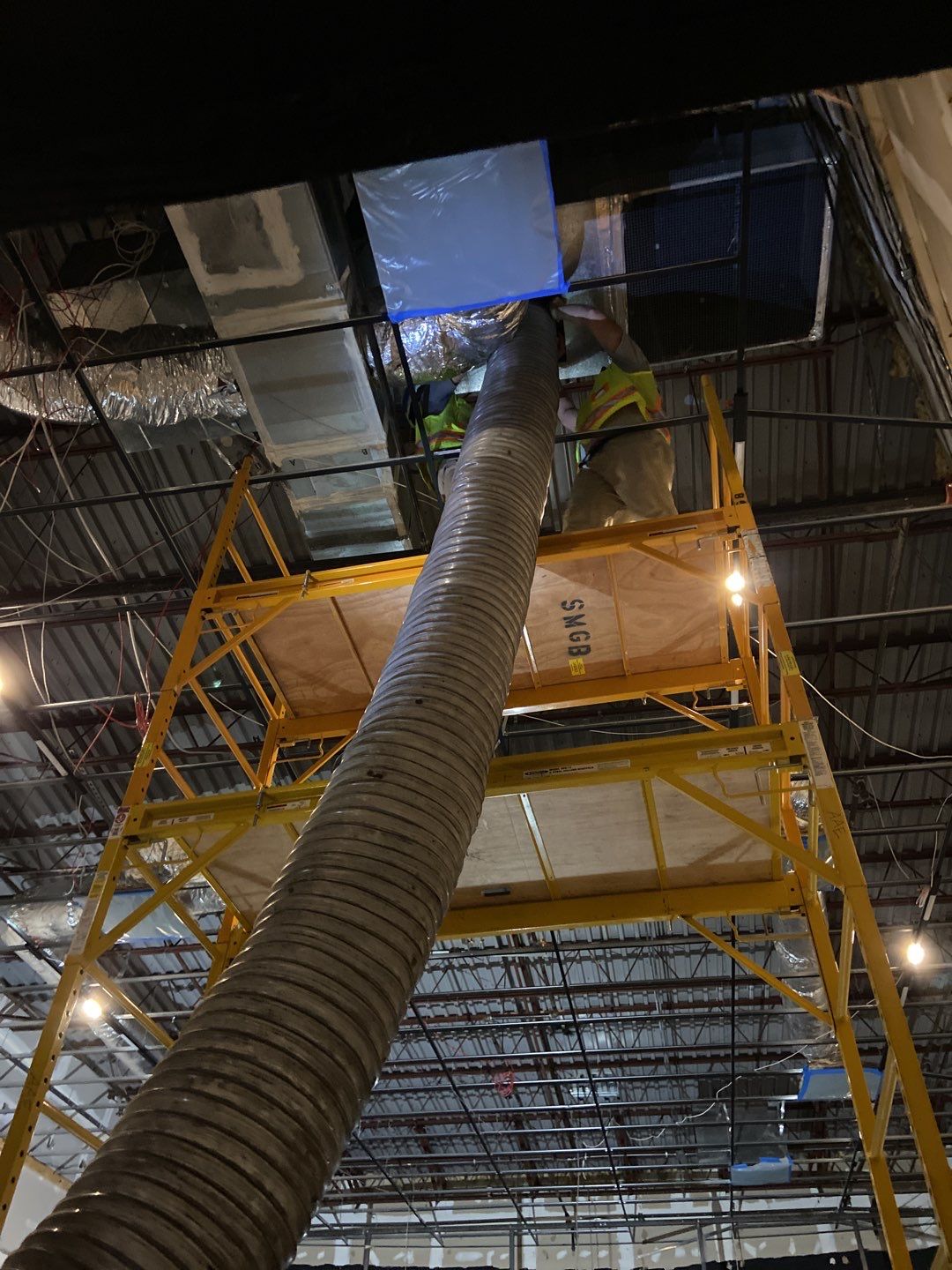
Inspect coils, plenums and CRAC/CRAH airflow; photograph conditions and scope to your site.
Seal work zones under negative pressure with HEPA filtration — nothing migrates onto energized gear.
Source-remove dust from coils, plenums, cabinets and ducts to NADCA ACR criteria.
Particle counts and matched-angle photos confirm cleanliness before hand-back.
Audit-ready closeout with a recommended re-inspection cadence.
Not every commercial duct cleaner belongs in a live data hall. For mission-critical work, require NADCA certification, proven experience in running data centers, absolute command of containment, negative pressure and HEPA collection, respect for hot/cold-aisle and change-control discipline, and audit-ready documentation. IAQ Restoration meets every one of these on every project — and our closeout records prove it.
Yes. We work live in running critical environments, phasing the work around your redundancy and maintenance windows with sealed containment, so cooling continuity and uptime are never broken.
Physical containment barriers, continuous negative pressure and HEPA-filtered collection keep particulate captured at the source, with air-quality checks before any space is handed back.
Inspect at least annually and clean based on verified conditions — typically every 1–2 years, and immediately after construction, MAC work or a filtration lapse, consistent with the NADCA ACR Standard.
Yes. Dust-loaded coils and plenums raise intake temperatures and cut cooling capacity, forcing longer runtimes, higher PUE and thermal risk. Cleaning restores your engineered cooling margin.
Our work supports ASHRAE TC 9.9 thermal and air-quality guidance and cleanliness frameworks like ISO 14644, cleaned to the NADCA ACR Standard and documented.
Yes. Our national team runs multi-site and colo programs under one scope, schedule and point of contact, with consistent documentation for every location.
NADCA-certified, uptime-aware crews, nationwide. Free scope review from your mechanical plans.
Call 800-883-6040Request a Quote