
Food processing duct cleaning supports sanitation and food safety, in line with EPA indoor air quality and NADCA standards. NADCA-certified air duct, coil and process-ventilation cleaning for food and beverage plants — sanitation-grade contamination control that protects product, supports FSMA and HACCP, and keeps production running. Nationwide, 24/7.
Airborne dust, mold and allergens from dirty ducts can land on open product and food-contact surfaces. Clean air is food safety.
Documented air-system cleaning supports your food-safety plan, GMPs and third-party audits (SQF, BRC).
Flour, sugar and starch dust in ducts is a combustion hazard. We coordinate with EHS and OSHA combustible-dust practices.
Cold-process and washdown areas breed moisture and microbial growth in ductwork. Source removal stops it.
Sanitation records, photos and verification for QA, EHS and audit files.
In a food or beverage plant, the air is part of the process. Supply, return and process-ventilation systems move air directly over open product, packaging lines and food-contact surfaces. When ductwork, coils and diffusers accumulate dust, condensation and microbial growth, that contamination can settle onto product — an FSMA, HACCP and brand-risk problem, not just a maintenance issue.
Processing environments are uniquely demanding: fine ingredient dust (flour, sugar, starch) that is both an allergen and a combustible-dust hazard, cold and washdown areas where condensation feeds mold, and 24/7 production that leaves little room for shutdowns. General commercial duct cleaning isn't built for a GMP environment.
Sanitation-grade air-side cleaning removes those contaminants at the source, protects product and people, supports your food-safety program, and keeps lines running. The numbers make the case:

FSMA, HACCP and GMP expectations, along with OSHA combustible-dust guidance and the NADCA ACR Standard, all point the same way: the air moving through a food plant must be clean, dry and controlled. Duct, coil and process-ventilation cleanliness is the piece that protects your product and your audit results.
Source removal keeps dust, mold and allergens from settling onto open product and food-contact surfaces.
Documented cleaning supports FSMA, HACCP, GMP and third-party audits (SQF, BRC) with verification records.
Removing accumulated flour, sugar and starch dust from ducts reduces a serious combustion and OSHA-citation risk.
Cleaning and treating cold-process and washdown ductwork stops the moisture-driven microbial growth that threatens product.
Food and beverage plants load their air systems with the very ingredients they handle. Fine dust from flour, sugar, spice and starch drifts into ducts and coils; washdown and refrigeration create condensation that feeds mold; and 24/7 production means the system rarely rests. Over time it accumulates in supply, return and process-ventilation ductwork that then recirculates it over the line.
Nowhere else does air pass so directly over open, edible product under such strict scrutiny. Work must meet sanitation and GMP expectations, coordinate with production and EHS around allergen changeovers and combustible-dust rules, and often happen during narrow sanitation windows — by crews who understand food plants, not general commercial ducts.
Ingredient dust in the ductwork is simultaneously an allergen cross-contact risk and, for flour, sugar and starch, a combustible-dust hazard. Source removal addresses both — protecting product and reducing a documented cause of industrial explosions.
Follow inspection-based cleaning per the NADCA ACR Standard, aligned to your sanitation and food-safety schedule: inspect regularly, clean when contamination, dust load or moisture is present, and always after allergen changeovers, construction or a microbial finding — with full documentation for audits.
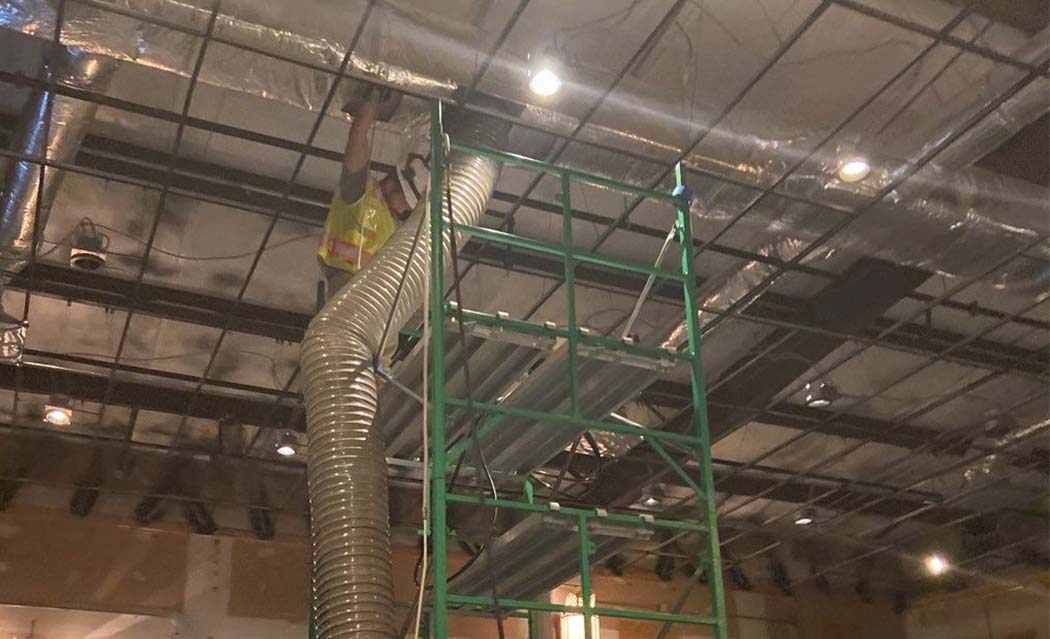
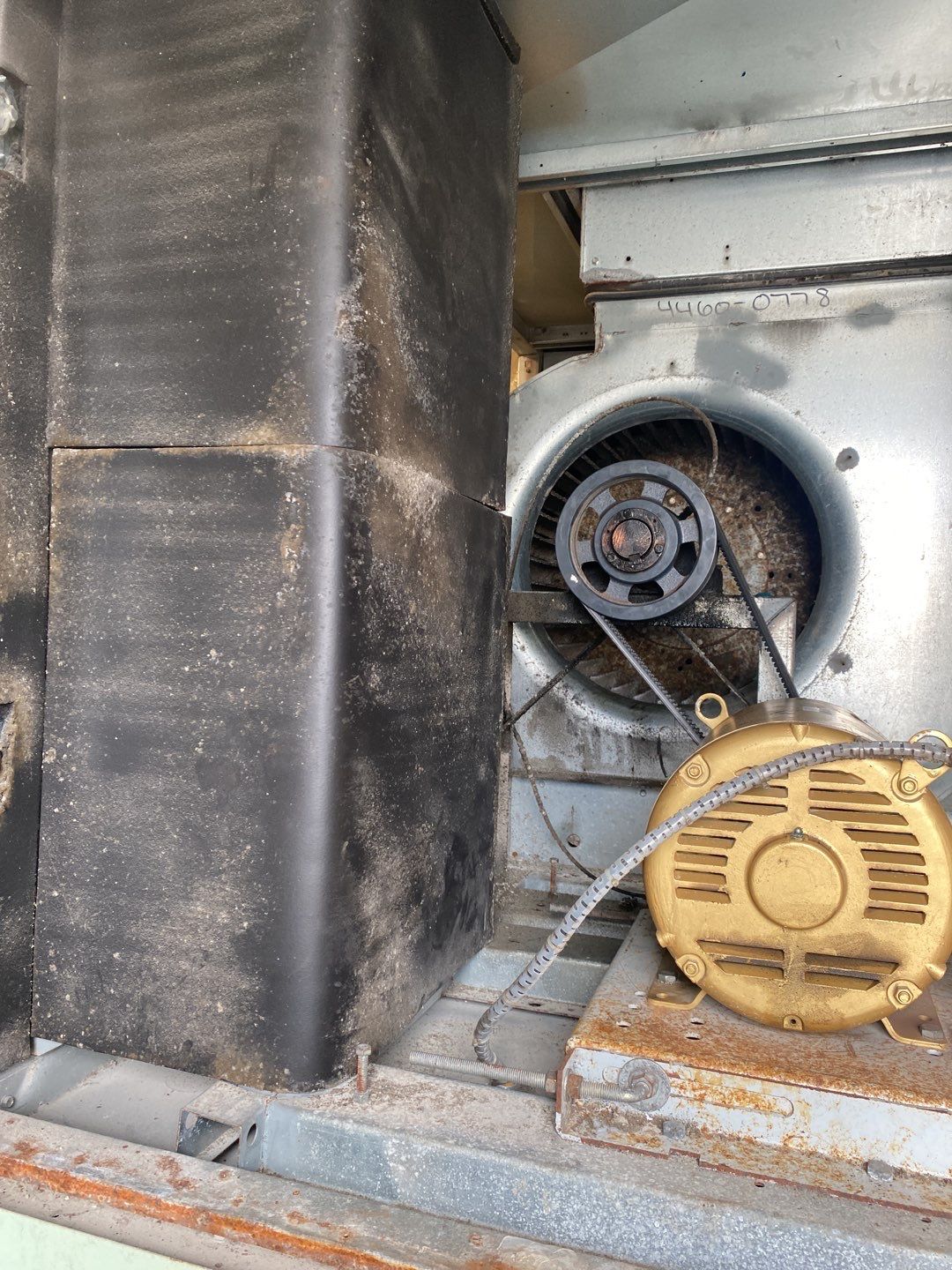
Map the system, inspect dust load and condensation, and scope to your sanitation windows.
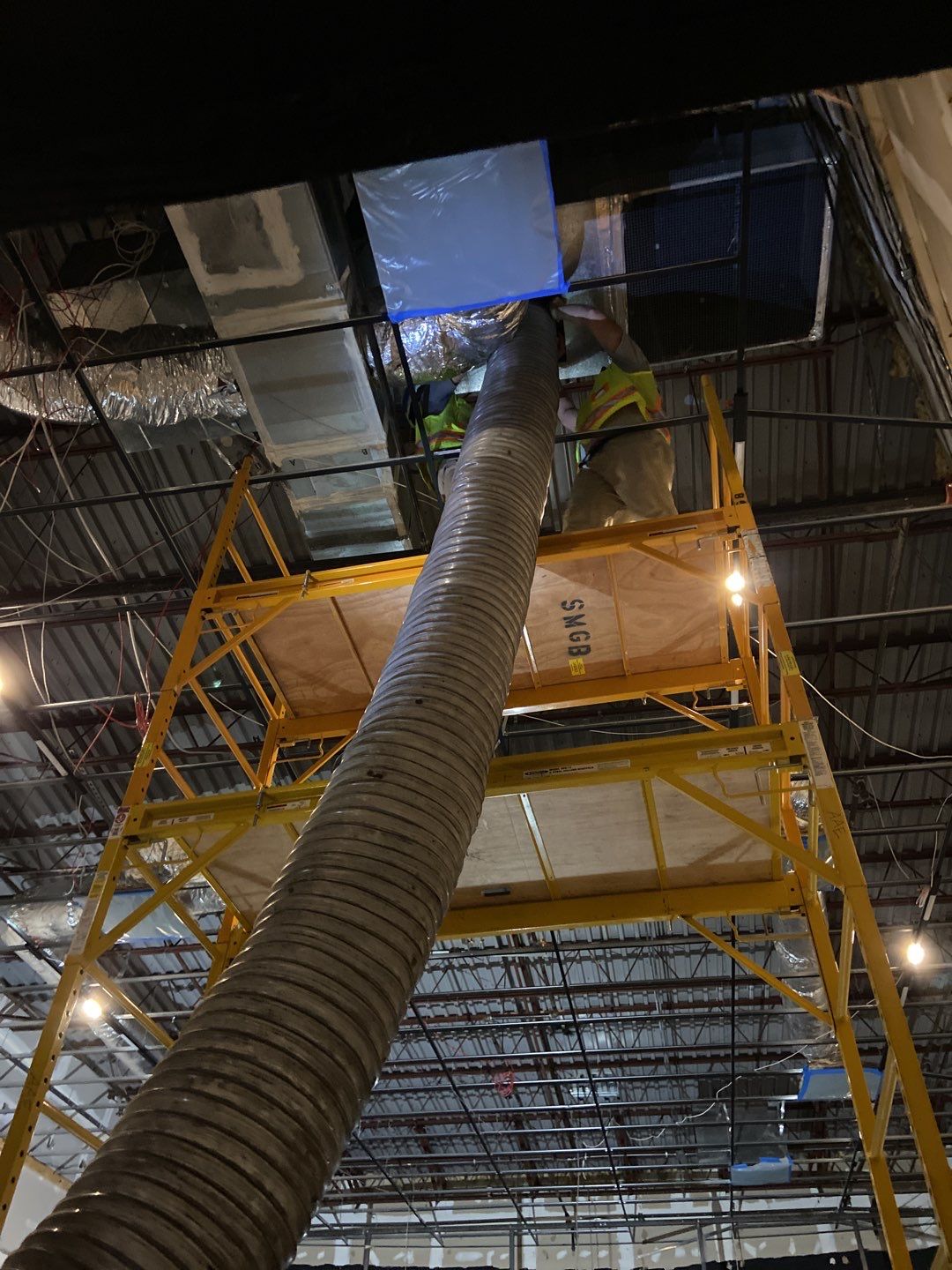
Seal and depressurize work zones with HEPA filtration to protect product and lines.
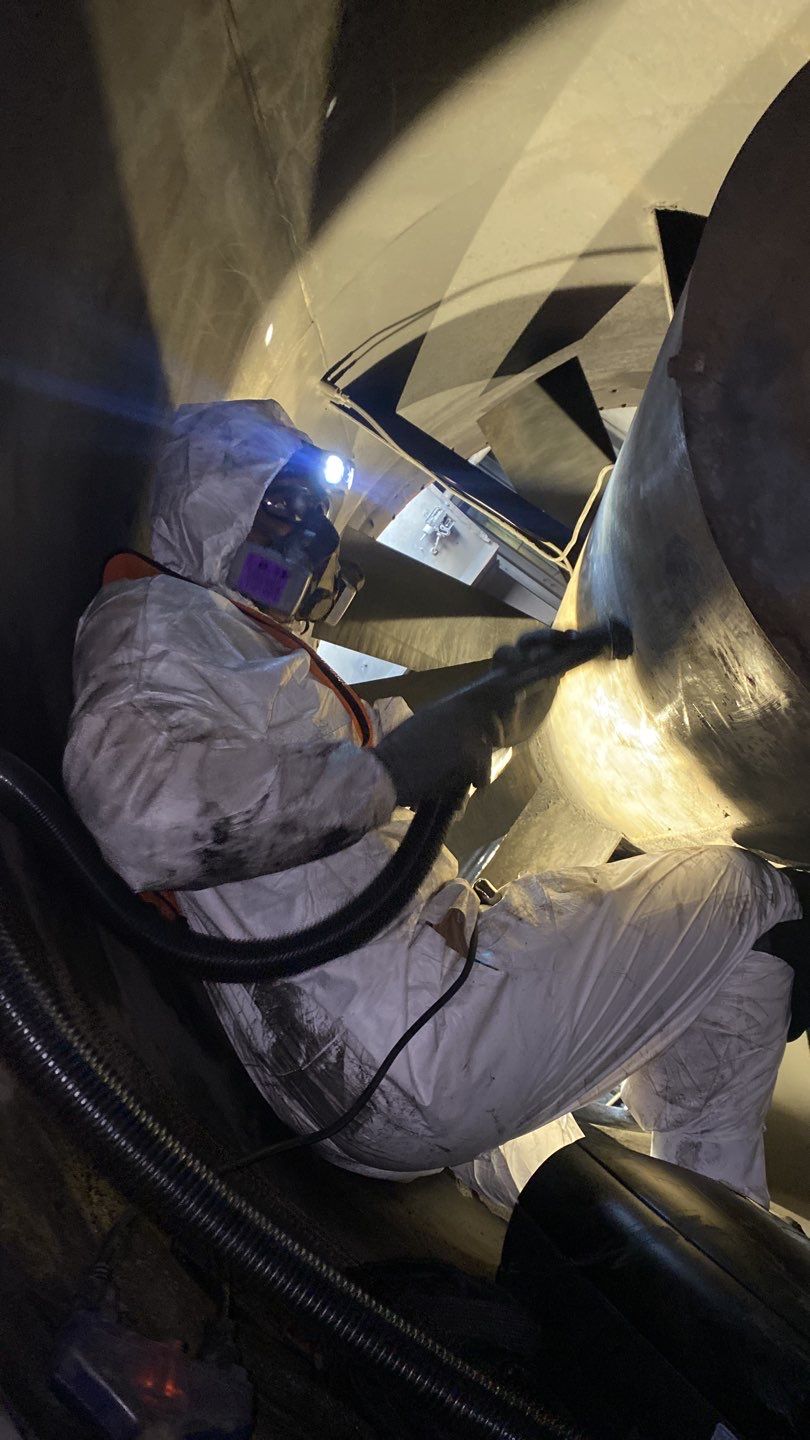
Source-remove dust, allergens and growth from ducts, coils and process ventilation to NADCA ACR.
Particle checks and matched-angle photos confirm cleanliness before restart.
Sanitation-grade closeout with verification for FSMA/HACCP and audit files.
A food plant is no place for general duct cleaners. Require NADCA certification, real food-and-beverage experience, command of containment and HEPA source removal, working knowledge of FSMA/HACCP/GMP, allergen changeovers and OSHA combustible-dust rules, and sanitation-grade documentation your auditors will accept. IAQ Restoration delivers all of it — and the records to prove it.
We schedule around your sanitation windows and production runs, isolating work zones under negative pressure so lines and product stay protected. For deeper work we coordinate with planned sanitation shutdowns.
Yes. Documented duct, coil and process-ventilation cleaning supports your food-safety plan, GMPs and third-party audits (SQF, BRC), with verification records for your files.
We coordinate with your EHS team and OSHA combustible-dust practices to remove accumulated ingredient dust from ductwork safely, reducing a documented explosion and citation risk.
We inspect condensation-prone ductwork, remove microbial growth under containment, replace wet internal insulation that can't be cleaned, and verify before restart.
Per the NADCA ACR Standard and your sanitation schedule: inspect regularly and clean when dust load, contamination or moisture is present, and always after allergen changeovers, construction or a microbial finding.
Yes. Our national team runs multi-site food-and-beverage programs under one scope, schedule and point of contact, with consistent, audit-ready documentation.
NADCA-certified, food-safety-aware crews, nationwide. Free scope review from your plans and sanitation schedule.
Call 800-883-6040Request a Quote