
Hotel duct cleaning keeps guest areas fresh and healthy, in line with EPA indoor air quality and NADCA standards. NADCA-certified air duct, coil and kitchen-exhaust cleaning for hotels, resorts and restaurants — fresh guest rooms, safer kitchens and healthier common areas, cleaned around your occupancy, 24/7 nationwide.
Musty rooms and stale corridors show up in reviews. Source-removing odors from the ductwork fixes the cause, not the symptom.
Grease-laden exhaust is a leading cause of restaurant fires. NFPA 96 cleaning protects guests, staff and property.
We phase work floor-by-floor, after hours and around events, so occupancy and service continue uninterrupted.
Clean air protects allergy-sensitive guests and staff — and the online reputation that fills your rooms.
Photos and documentation for brand standards, health inspections and insurance.
Guests judge a property in the first thirty seconds, and much of that judgment is invisible. Stale, musty or smoky air in a room, lobby or corridor tells a guest the place isn't cared for, no matter how fresh the linens are. That air is recirculated by the HVAC system, and when ductwork, coils and fan-coil units are loaded with dust, moisture and odor, every room breathes it.
Hospitality runs some of the hardest-working air systems in any building: humid pool areas that grow mold, laundry heat and lint, and commercial kitchens whose exhaust hoods and ducts collect flammable grease. Grease-laden kitchen exhaust is a leading cause of restaurant fires, and NFPA 96 requires it to be cleaned on a regular schedule.
Professional cleaning removes odors and contaminants at the source, protects guests and staff, cuts fire and liability risk, and keeps HVAC running efficiently across a 24/7 operation. The numbers make the case:
From NFPA 96 kitchen-exhaust requirements to ASHRAE 62.1 ventilation and the NADCA ACR Standard, hospitality air systems are expected to be clean, safe and documented. Duct, coil and exhaust cleanliness is the piece that protects your guests, your reviews and your property.
Source removal clears the dust, moisture and odor reservoirs behind musty rooms, stale corridors and smoke complaints.
NFPA 96 kitchen-exhaust cleaning removes flammable grease from hoods and ducts, protecting guests, staff and your building.
Clean coils and airflow cut energy use, emergency calls and PTAC/fan-coil failures across every floor.
Healthier air supports guest satisfaction, brand standards and health-inspection readiness.
High occupancy and 24/7 operation load hospitality air systems fast. Guest rooms, corridors and lobbies recirculate air through fan-coil units and ductwork that collect skin cells, dust, moisture and odor. Kitchens push grease and steam into exhaust systems. Pool and laundry areas add humidity that feeds mold — and all of it ends up in the ducts.
Few buildings mix so many demanding conditions: sleeping guests who can't be disturbed, humid amenity spaces, and commercial kitchens with fire-code exhaust, all running around the clock. Work has to be phased floor-by-floor, after hours and around events, by crews who understand hotels and restaurants.
Smoke, must and cooking odors don't live only on surfaces — they saturate the porous interior of ductwork and fan-coil units and are re-emitted every time the system runs. Air fresheners mask it; source removal eliminates it, so the smell doesn't return.
Follow the NADCA ACR Standard for HVAC and NFPA 96 for kitchen exhaust: inspect at least annually, clean HVAC every 2–3 years (sooner for high-humidity or high-turnover areas), and clean kitchen exhaust on the NFPA schedule for your cooking volume. Every project should close with documentation.
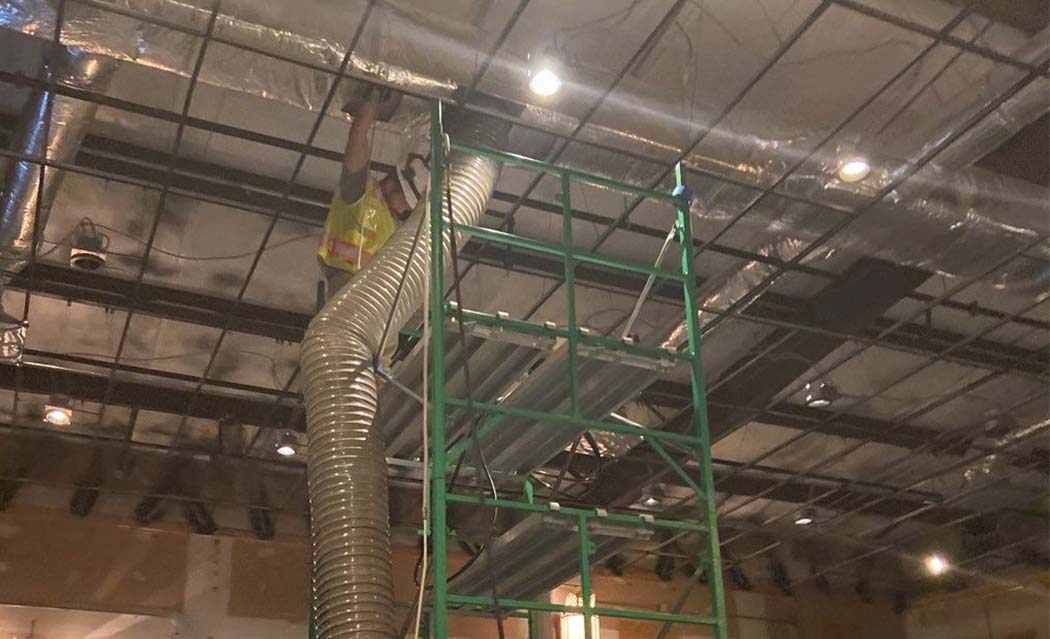
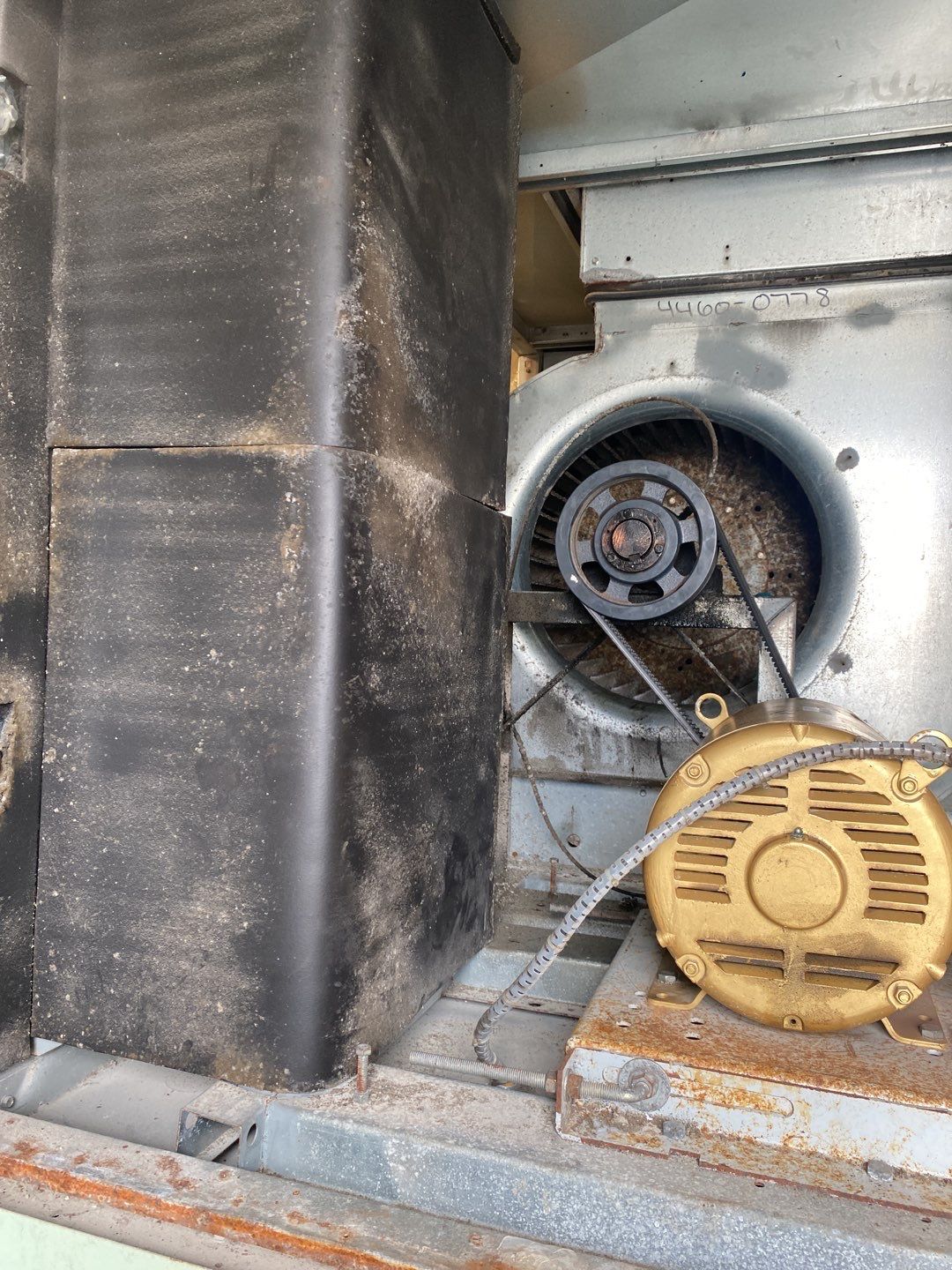
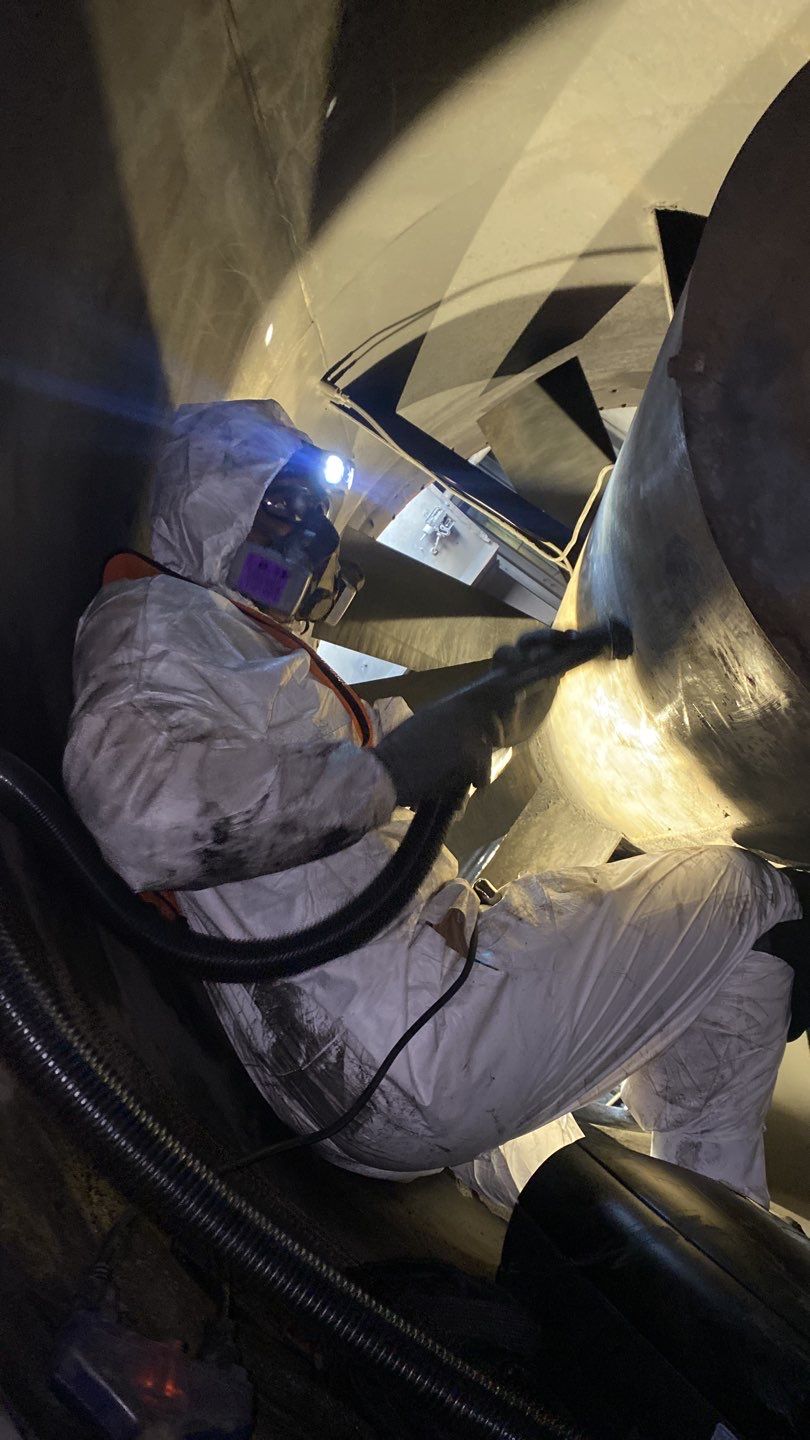
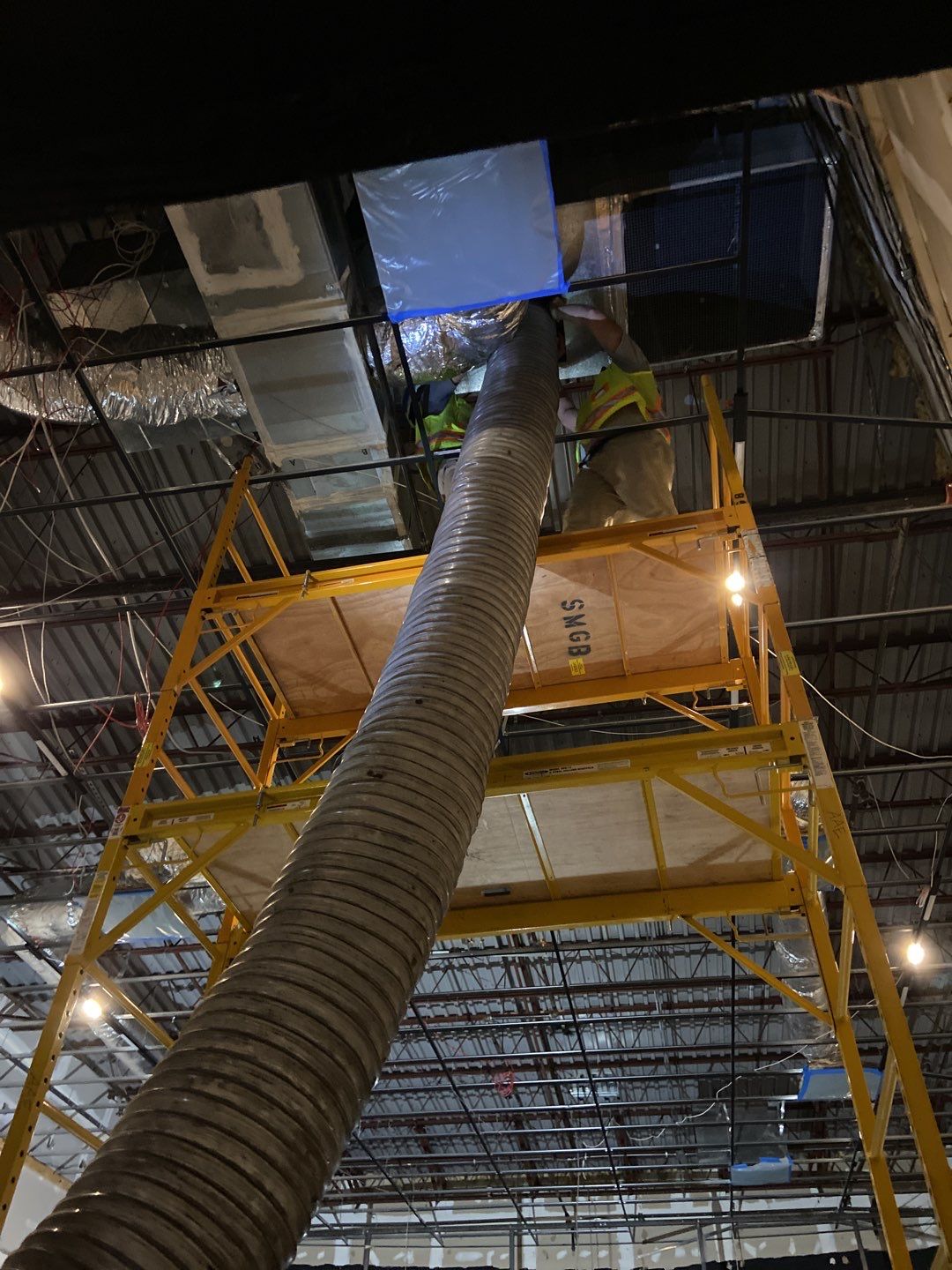
Inspect HVAC and kitchen exhaust, photograph conditions and scope around your occupancy.
Seal work zones under negative pressure with HEPA filtration to protect guests and staff.
Source-remove dust, grease and growth from ducts, coils, fan-coils and exhaust to NADCA/NFPA criteria.
Matched-angle photos and checks confirm cleanliness before areas reopen.
Documentation for brand standards, health inspections and a re-inspection cadence.
Not every duct cleaner understands a live hotel or restaurant. For hospitality, require NADCA certification and NFPA 96 kitchen-exhaust capability, crews comfortable working around guests after hours, command of containment and odor source removal, and documentation your brand and health inspectors will accept. IAQ Restoration delivers all of it — and the closeout records to prove it.
No. We phase work floor-by-floor, after hours and around events, with each zone isolated under negative pressure, so guest rooms and service continue uninterrupted.
Yes. Those odors live inside the ductwork and fan-coil units. We source-remove the residue and treat the system so the smell is eliminated rather than masked.
Yes. We clean hoods, ducts and exhaust fans to remove flammable grease per NFPA 96, on the schedule your cooking volume requires, with documentation.
Inspect at least annually; clean HVAC every 2–3 years (sooner for high-humidity areas) per the NADCA ACR Standard, and kitchen exhaust on the NFPA 96 schedule for your cooking volume.
Yes. Our national team runs multi-site hotel and restaurant programs under one scope, schedule and point of contact, with consistent documentation.
We inspect high-humidity areas, remove any microbial growth under containment, and apply appropriate treatment, coordinating with your engineering team.
NADCA-certified, NFPA 96-capable crews, nationwide. Free scope review for your property or portfolio.
Call 800-883-6040Request a Quote