
What every court administrator should know about courthouse duct cleaning
Courthouse duct cleaning keeps justice facilities clean and compliant, in line with EPA indoor air quality and NADCA standards. Jurors, attorneys, staff and the public move through courthouses daily — among the densest traffic of any public building.
Many courthouses and city halls are historic buildings running ductwork through decades of renovation layers.
Dust-laden air degrades archives, records rooms and law libraries — clean air systems protect the paper.
NADCA ACR calls for inspection-based cleaning; busy court facilities typically need 12–24 month cycles.
Containment, negative pressure and HEPA filtration capturing 99.97% of 0.3-micron particles.
Air quality is part of due process
Courthouses, city halls and libraries concentrate people who have no choice about being there: jurors summoned for days at a time, defendants and attorneys, clerks and judges, and citizens conducting essential business.
Court facilities also punish their air systems in distinctive ways. Jury assembly rooms and courtrooms pack people shoulder to shoulder for hours; holding and transfer areas run continuous ventilation demands; and the building itself is often a historic structure whose ductwork has survived a century of remodels, each one leaving construction dust behind. Meanwhile records rooms, evidence storage and law libraries hold paper that airborne dust actively degrades.
IAQ Restoration cleans courthouses, city halls and libraries with crews experienced in security-controlled buildings — coordinating with court security and sheriff's departments, working around active dockets, and documenting everything for public records. The numbers make the case:

What courthouse duct cleaning does for your facility
Healthier courtrooms
Removing dust, allergens and microbial growth cuts the airborne load in the building's densest, longest-occupied rooms.
Records protection
Cleaner supply air means less particulate settling on archives, evidence storage and law library collections.
Docket-safe scheduling
Nights, weekends and recess windows — court sessions and public services never stop for the work.
Budget stewardship
Restored airflow and clean coils cut energy waste in buildings counties heat and cool year-round.
What builds up inside courthouse HVAC systems
Historic public buildings carry historic contamination. Ductwork installed decades ago has collected every renovation's drywall dust, every winter's salt and grit tracked through security lines, and the continuous shedding of full galleries and jury pools. Original duct runs often mix with newer additions, creating dead legs and low-flow sections where debris settles permanently.
High-security design adds its own challenges: sally ports and holding areas with dedicated exhaust, restricted mechanical spaces that outside vendors rarely access properly, and ventilation zones that cannot be shut down while court is in session. The result is deferred cleaning measured in decades — and air quality complaints from the bench, the jury box and the clerk's office.
Buildings we service
County and federal courthouses, city halls, law libraries, public libraries, records annexes and administrative court facilities. Scopes respect chain-of-custody areas, coordinate with court security and the sheriff or marshals service, and protect archival spaces with additional filtration during the work.
How often should court facilities clean their ductwork?
The NADCA ACR Standard calls for inspection-based cleaning: assess first, clean where contamination exceeds benchmarks. For court facilities we recommend annual inspections of air handlers and representative duct runs, with source-removal cleaning typically every 12–24 months — and immediately after renovations, water intrusion or persistent complaints in any wing. Closeout documentation is formatted for facility records and public-records requests.
What's included
- Air handling units, rooftop units and mechanical rooms
- Courtroom, jury room and office supply and return ductwork
- Coils, blowers, plenums and drain pan decontamination
- Holding-area and dedicated exhaust systems
- Archive-safe containment with HEPA negative air
- Public-records-ready closeout documentation
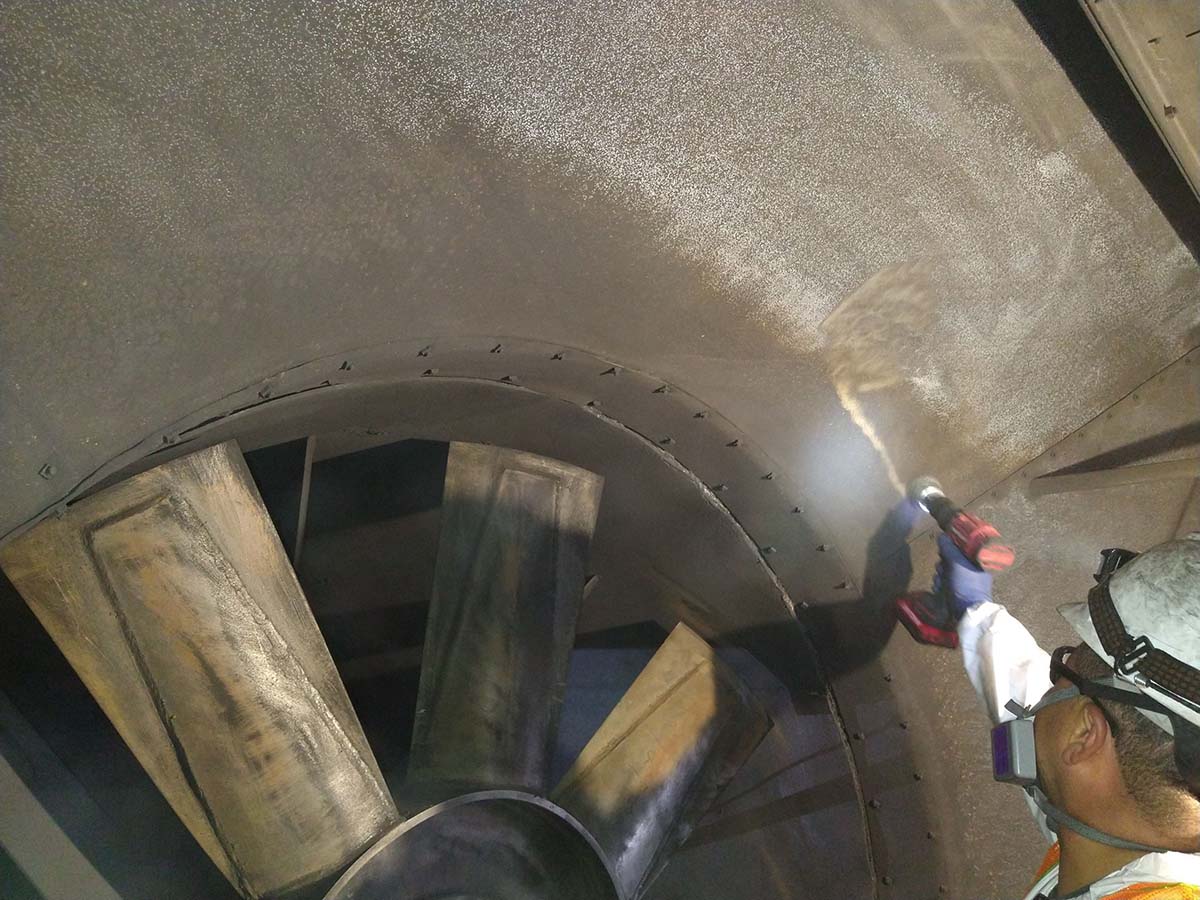
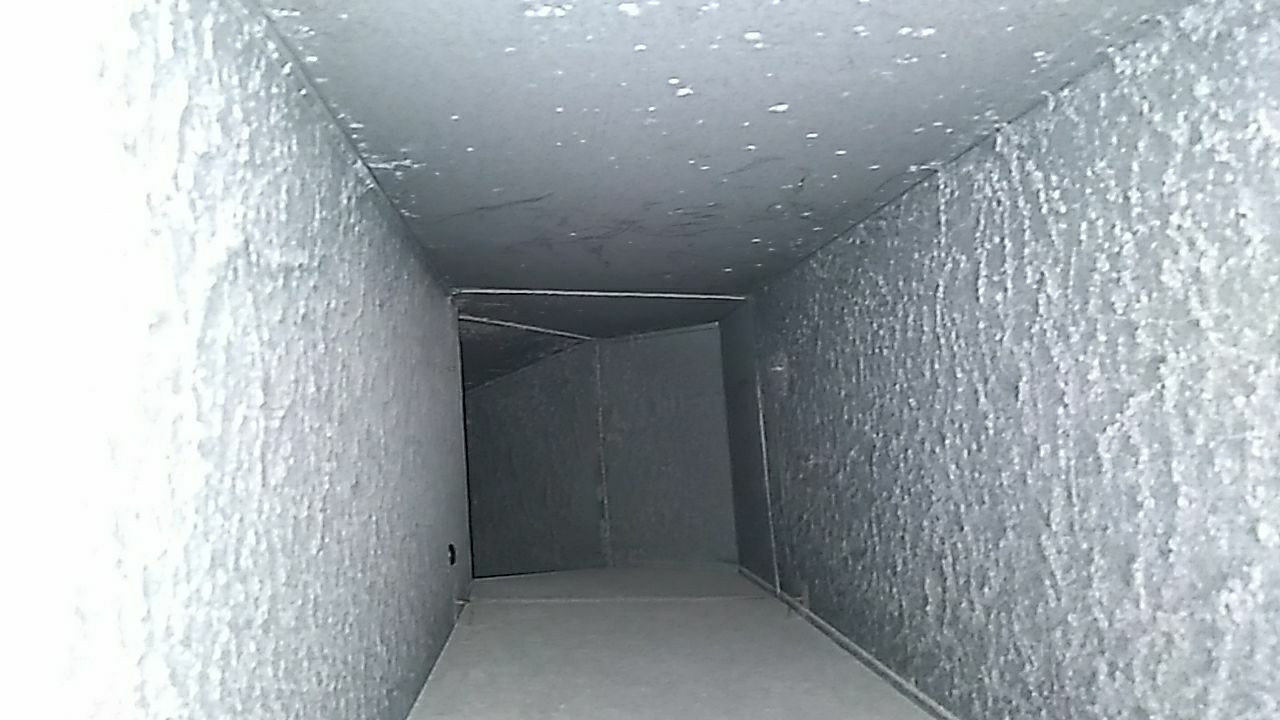
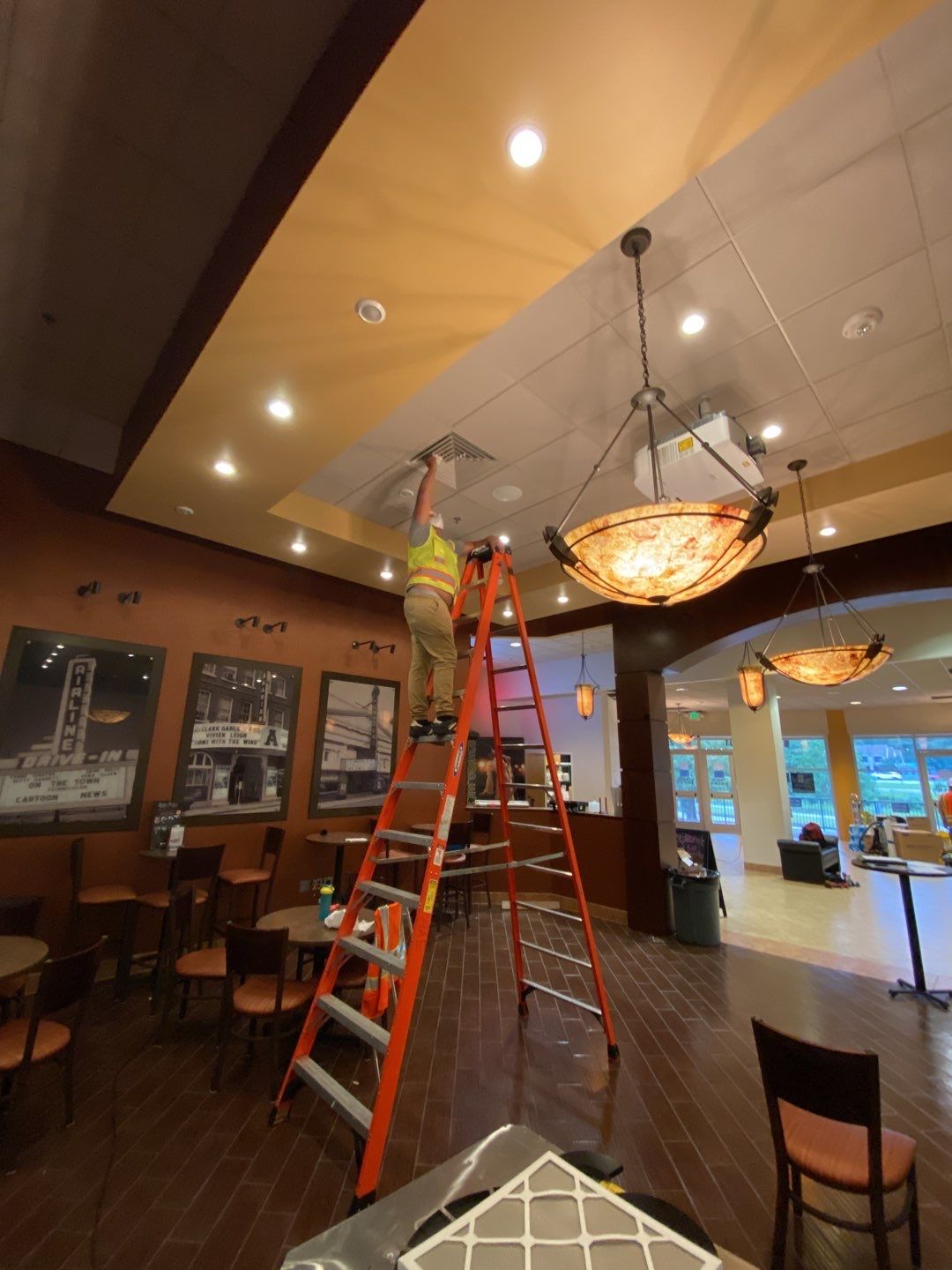
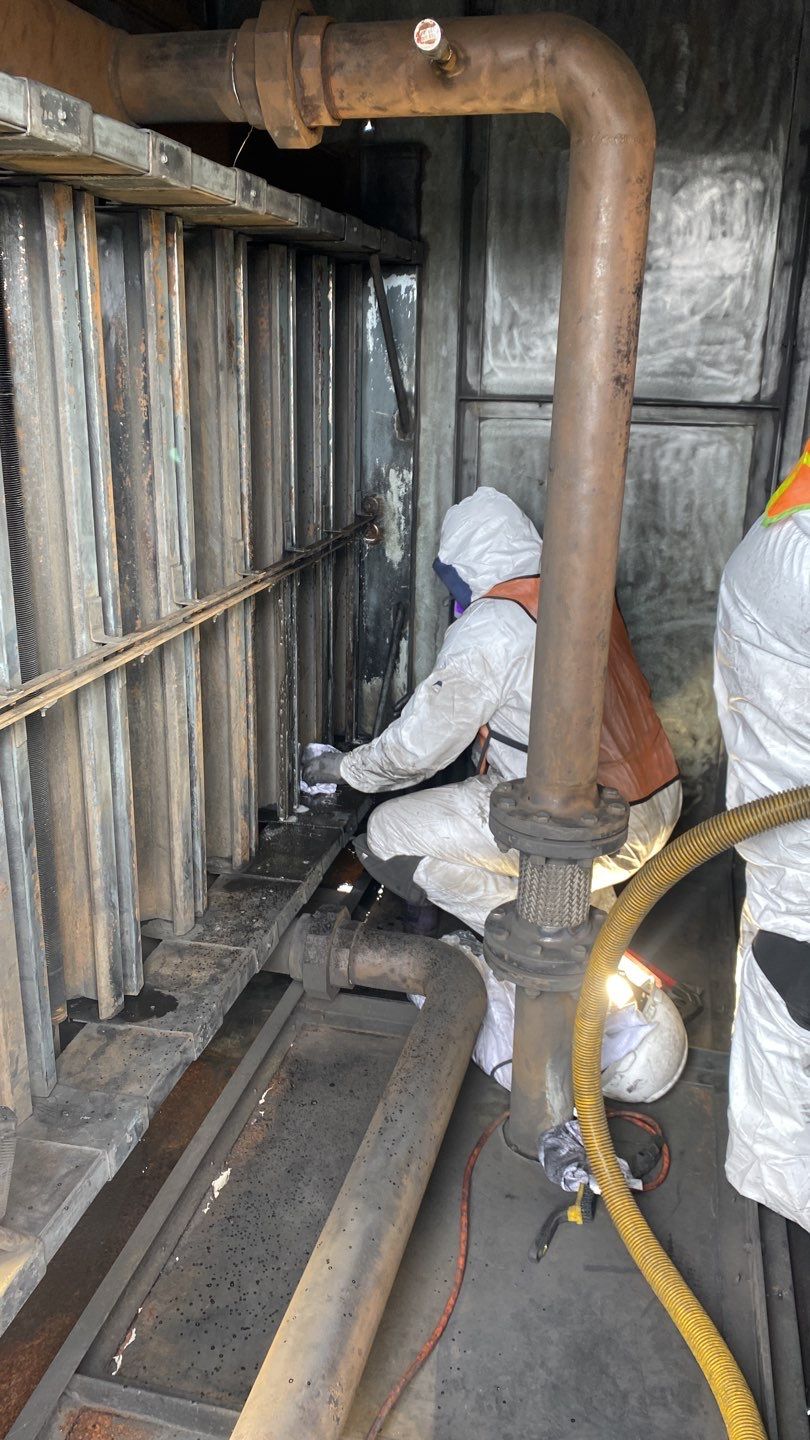
Our crews inside public buildings
Five steps, coordinated with court security
Assess & Plan
System mapping, security coordination and docket-safe scheduling.
Contain
Barriers and HEPA negative air protect courtrooms, offices and archives.
Source Removal
Agitation and extraction through ducts, coils, blowers and plenums.
Verify
Matched-angle before/after photos confirm cleanliness against ACR criteria.
Report
Records-ready closeout before the next session is called to order.
Choosing a duct cleaning provider for court facilities
Court buildings demand contractors who understand what happens inside them. Require NADCA certification with government references, crews that pass background screening and follow court security direction without friction, scheduling that treats session days as untouchable, containment that protects archives and chain-of-custody spaces, and closeout documentation that survives a public-records request. IAQ Restoration has met that bar in courthouses, city halls and secure public buildings nationwide.
Courthouse duct cleaning questions, answered
Inspect annually and clean based on verified conditions. Most court facilities schedule source-removal cleaning every 12–24 months, and immediately after renovations, water events or persistent complaints — consistent with the NADCA ACR Standard.
No. Work is scheduled nights, weekends, holidays and recess windows, phased by wing, with each zone contained under HEPA negative air and returned before the next session.
We coordinate directly with court security, sheriffs or the marshals service: background-screened technicians, badging and escorts, tool control where required, and full respect for restricted and chain-of-custody areas.
Yes. Historic courthouses are a specialty — we plan access around original construction, protect plaster and millwork, and clean legacy duct runs that have never been properly serviced.
Yes. Records rooms, evidence storage and libraries get enhanced containment and supplemental HEPA filtration so no dislodged particulate reaches the collections.
Yes — city halls, public libraries, records annexes and administrative buildings, under the same security-aware, documentation-heavy approach.
A written scope, safety plan and matched-angle before/after photo verification — formatted for facility records, commissioners and public-records requests.
Get a facility assessment for your courthouse
Security-coordinated, NADCA-certified crews. Docket-safe scheduling, nationwide.
Call 800-883-6040 Request a Quote Online