
What every plant and warehouse manager should know about warehouse duct cleaning
Warehouse duct cleaning keeps facility air clean and compliant, in line with EPA indoor air quality and NADCA standards. Process dust, packaging fibers and oil aerosols load industrial ductwork far faster than any office building.
Dust layers on overhead ducts and lint-loaded exhaust are recognized combustible-dust and fire hazards.
NADCA ACR calls for inspection-based cleaning; high-load zones often need 12–24 month cycles.
Fouled coils and choked airflow force equipment to work harder — wasting energy and inviting downtime.
Containment, negative pressure and HEPA filtration capturing 99.97% of 0.3-micron particles.
Air quality is production uptime
Industrial facilities move more air through harsher conditions than any other building type. Manufacturing plants, warehouses and distribution centers run ventilation systems around the clock in environments loaded with process dust, packaging fibers, forklift emissions and oil aerosols.
Every gram of dust that settles inside ductwork eventually lands somewhere — on product, in electronics, inside sensors, VFDs and robotics. Contaminated airflow spreads odors and residues between production zones, while dust-choked coils and duct runs lose static pressure and force fans and compressors to work harder for the same output. On high-bay overhead ductwork, accumulated dust becomes a housekeeping and combustible-dust concern your EHS team has to answer for.
That is why experienced plant managers treat industrial duct cleaning and HVAC decontamination as preventive maintenance for production — not cosmetics. Clean air systems protect inventory, stabilize climate zones, cut energy waste and keep the air your workforce breathes inside OSHA expectations. The numbers make the case:
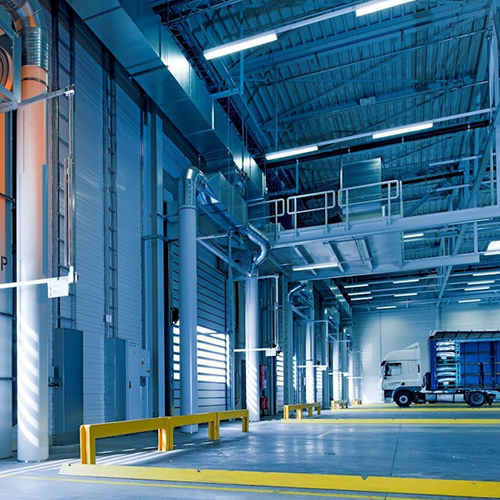
What clean air systems do for your operation
Production uptime
Clean coils, blowers and ducts reduce strain on mechanical systems — fewer breakdowns, longer equipment life, fewer emergency calls mid-shift.
Worker health & OSHA IAQ
Removing settled contaminants cuts the airborne particulate load your workforce breathes and reduces air-quality complaints on the floor.
Energy efficiency
Restored airflow and clean heat-exchange surfaces let HVAC equipment hit setpoints with less effort — measurable on your utility bill.
Fire-risk reduction
Removing combustible dust layers and lint from ducts and exhaust systems directly supports your NFPA housekeeping obligations.
What builds up inside industrial HVAC systems
Industrial air systems collect whatever the operation produces. Machining and assembly throw metal fines and lubricant aerosols into the air; packaging lines shed cardboard and shrink-wrap fibers; food and beverage processing adds flour, sugar and organic dusts; warehouses contribute pallet debris, tire particulate from forklifts and dust tracked in through dock doors that never stay closed. All of it gets pulled into returns, packed onto coils and layered along hundreds of feet of trunk duct.
Overhead high-bay ductwork deserves special attention. Dust that settles on top of ducts, joists and equipment is exactly the fugitive dust NFPA housekeeping standards target — and it is also the hardest to reach, which is why it gets skipped by janitorial contracts for years at a time. Meanwhile moisture-prone components — cooling coils, drain pans, humidification systems — can quietly support microbial growth that spreads odors through conditioned zones.
How often should an industrial facility clean its ductwork?
The NADCA ACR Standard calls for inspection-based cleaning: assess first, clean when contamination exceeds benchmarks. For industrial facilities we recommend annual inspections of air handling units and representative duct sections, with source-removal cleaning typically every 12–24 months in high-load zones — and immediately after construction projects, racking reconfigurations, tenant improvements or any water intrusion event.
Scheduling is built around your production calendar, not ours. Crews work nights, weekends and planned shutdown windows, coordinate lockout/tagout with your maintenance team, and hand each zone back clean and operational before the next shift starts.
What's included in warehouse duct cleaning
- Rooftop units (RTUs), makeup air units (MAUs) and air handlers (AHUs)
- Long trunk runs and high-bay overhead ductwork — lift plans included
- General and process-adjacent exhaust systems
- Coils, blowers, plenums and terminal units
- Containment that keeps debris off inventory, racking and electronics
- EHS/QA closeout: scope, safety plan, SDS and before/after photos
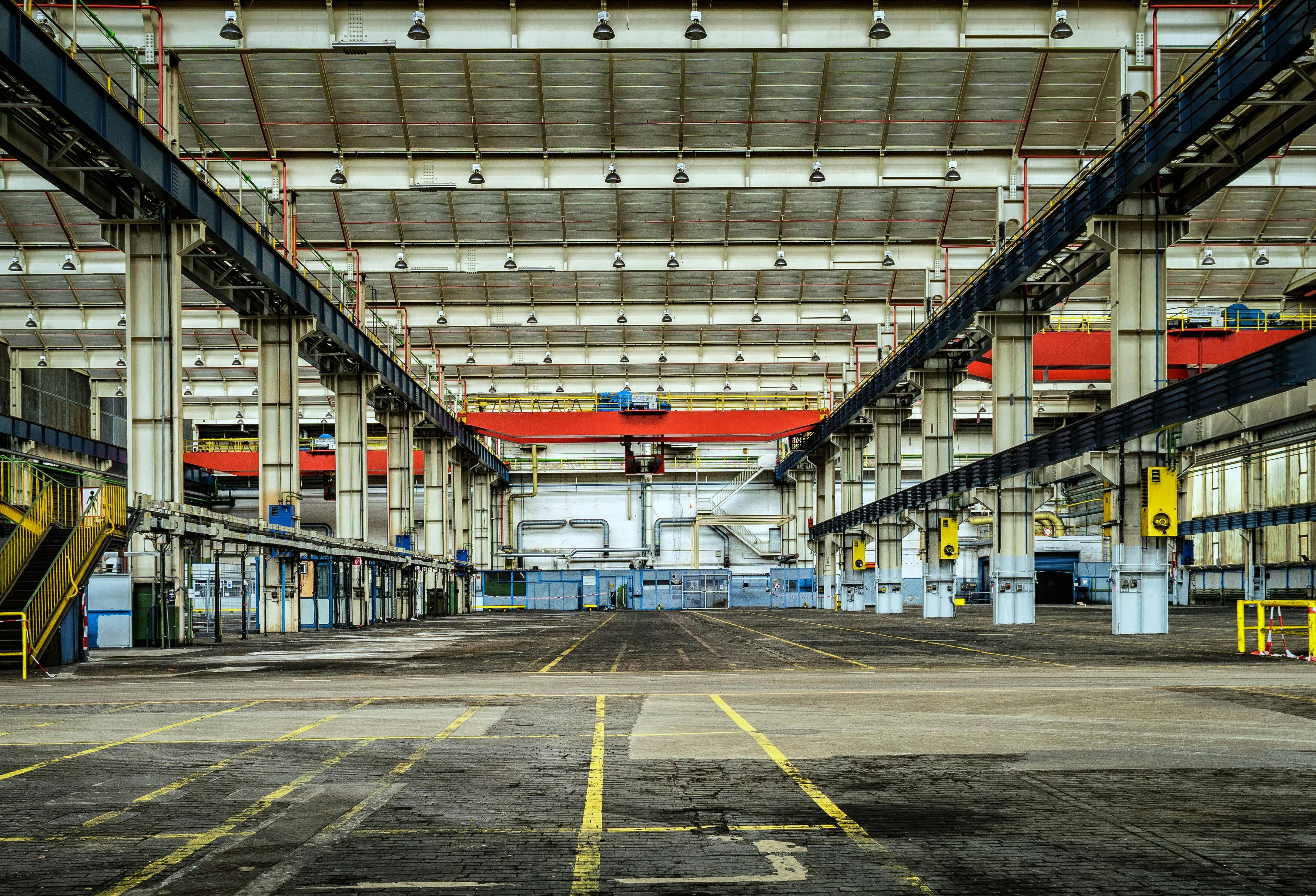
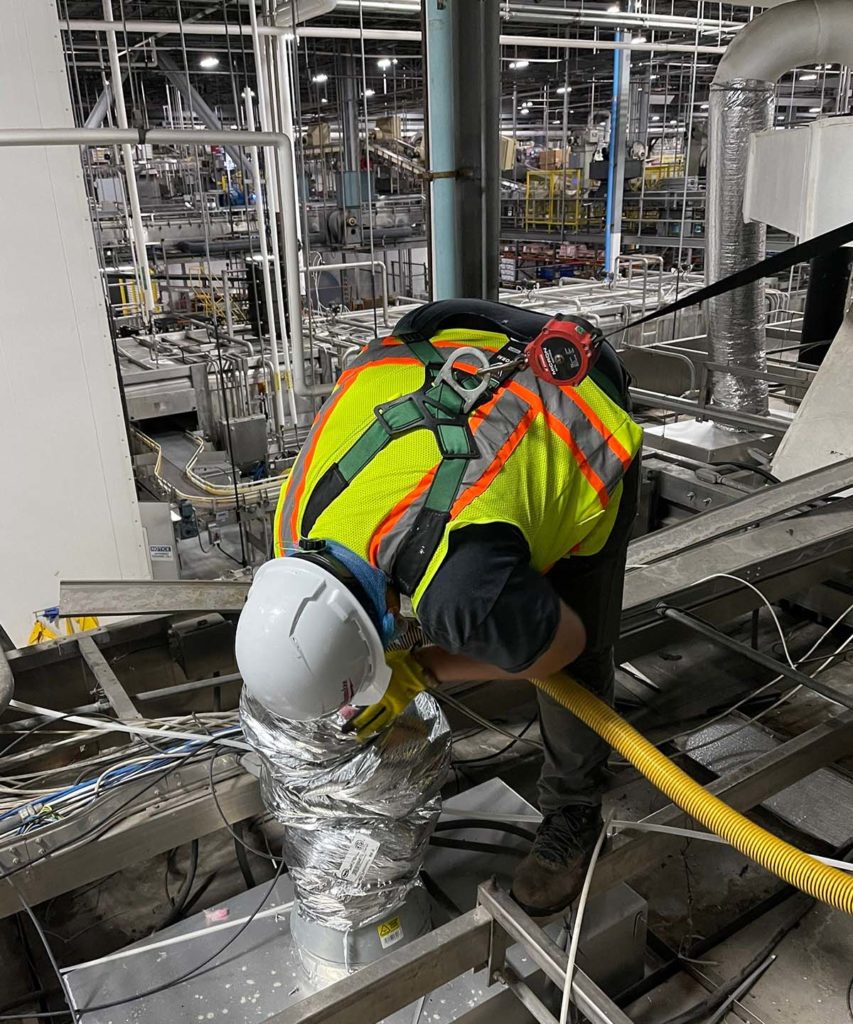
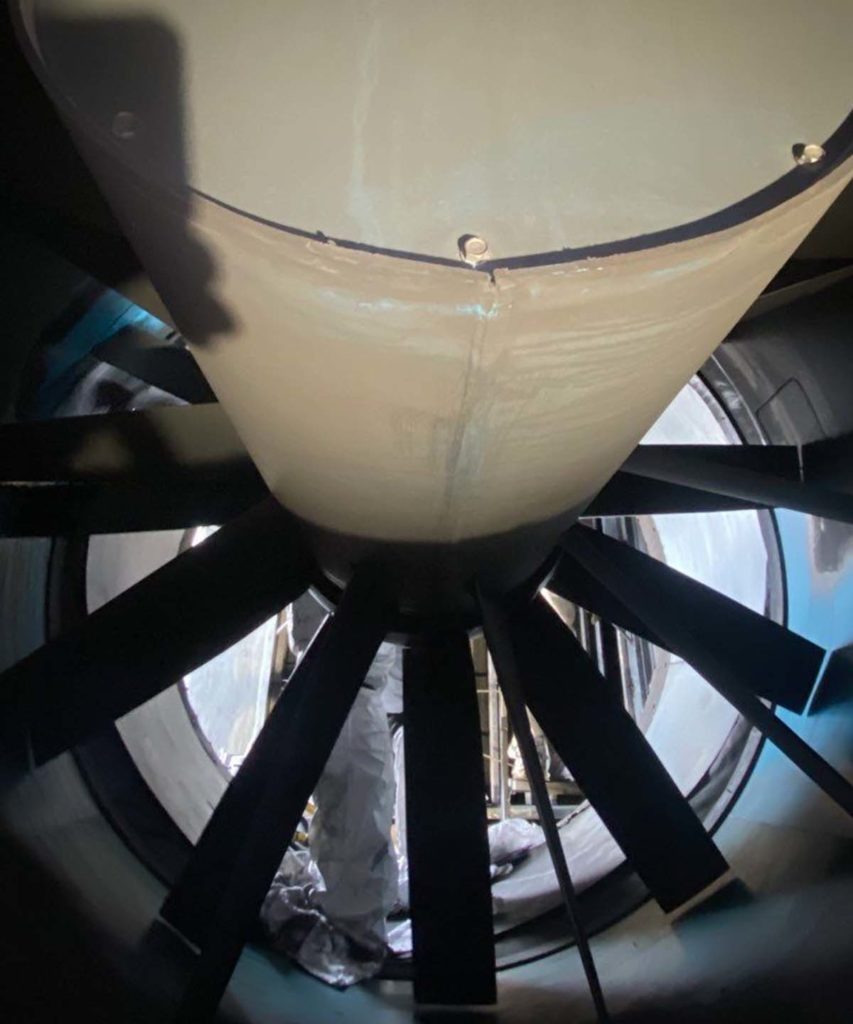
Our crews inside real industrial facilities
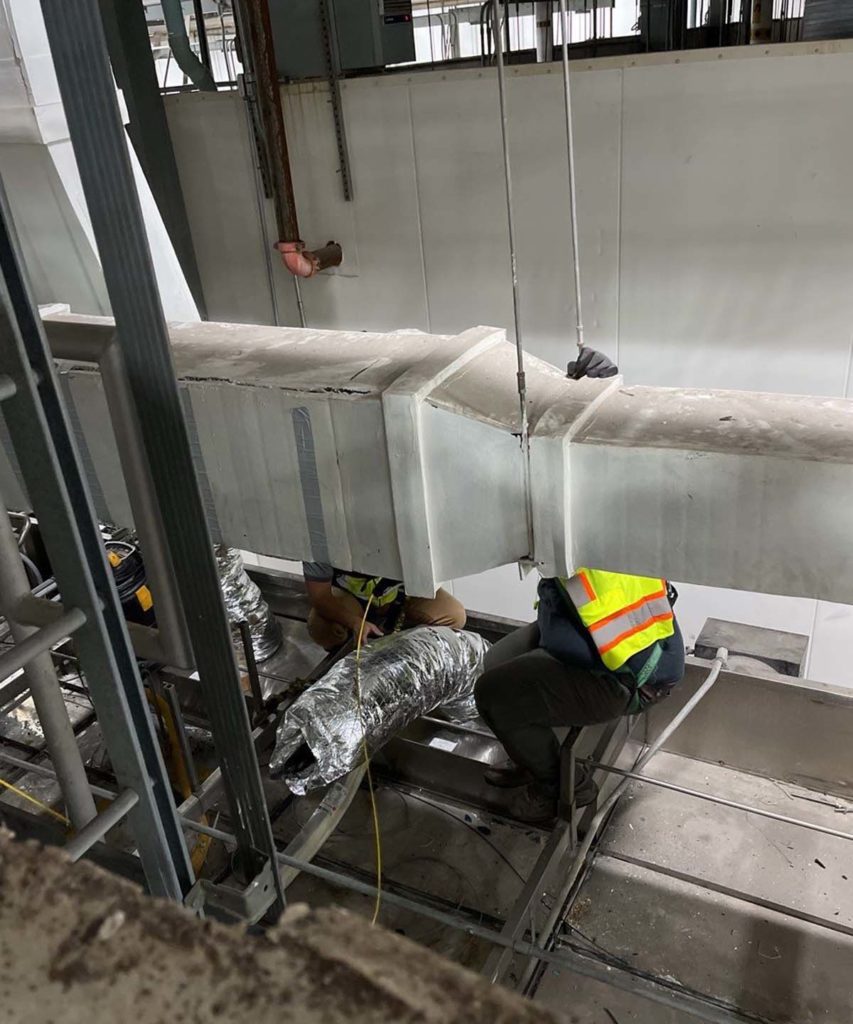
Five steps, zero production surprises
Assess & Plan
System mapping, lift and access plans, LOTO coordination with your maintenance team.
Contain
Barriers and HEPA negative air keep debris off product, racking and electronics.
Source Removal
Agitation and extraction through trunks, branches, coils, blowers and exhaust.
Verify
Matched-angle before/after photos confirm cleanliness against ACR criteria.
Report
EHS/QA-ready closeout with SDS and a recommended re-inspection cadence.
Choosing an industrial duct cleaning provider
Industrial work is not commercial work with taller ladders. When evaluating providers for plant or warehouse HVAC cleaning, require NADCA certification with documented industrial experience, site-specific safety planning — lifts, LOTO, hot-work and dust-control policies — containment methods proven around inventory and sensitive electronics, the crew depth to work shutdown windows without blowing the schedule, and closeout documentation your EHS and QA auditors will accept without questions. IAQ Restoration brings all five to every project, at plants and distribution centers across the country.
Industrial duct cleaning questions, answered
Inspect annually and clean based on verified conditions. Most plants and warehouses schedule source-removal cleaning every 12–24 months for high-load zones, and immediately after construction, racking changes or water events — consistent with the NADCA ACR Standard.
Usually not. Work is phased by zone during nights, weekends or planned shutdown windows, with lockout/tagout coordinated through your maintenance team and each area handed back clean before the next shift.
Yes. We coordinate hazard assessment with your EHS team, use appropriately rated equipment with grounding and bonding practices, and follow your site dust-control and hot-work policies throughout the project.
Yes. Every work zone is isolated with physical containment and HEPA-filtered negative air, keeping dislodged debris off product, racking, sensors and electronics — and removing the settled dust that would otherwise infiltrate them over time.
Yes. Lift and high-reach access planning is part of every industrial scope — boom lifts, scissor lifts and fall-protection protocols are standard equipment for our crews.
Yes. IAQ Restoration runs national multi-site programs with standardized scope, pricing and reporting, so every plant and distribution center in your portfolio gets the same documented result.
A written scope, site-specific safety plan, SDS for all products used, and matched-angle before/after photos — organized so your EHS and QA teams can drop them straight into audit files.
Get a facility assessment for your plant or warehouse
NADCA-certified industrial crews, nationwide. Free scope review from your mechanical plans.
Call 800-883-6040 Request a Quote Online